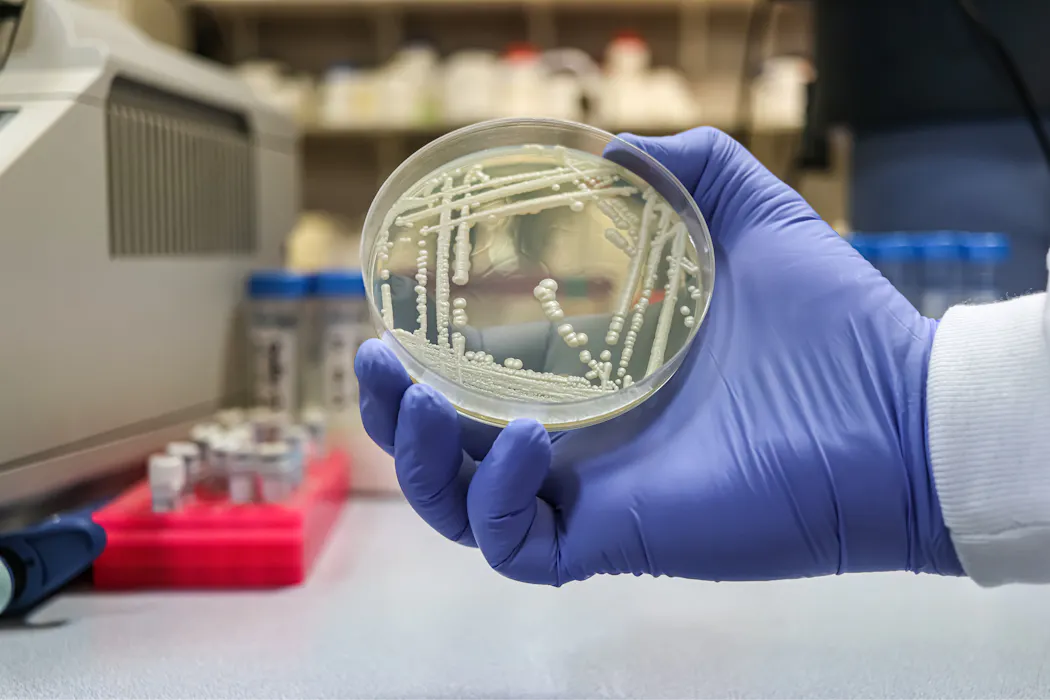
Every year, fungal infections kill around 2.5 million people worldwide, more than tuberculosis and malaria combined. Yet most people may have never heard of the fungi responsible, and few health systems track them in any organised way.
In a recent review, my colleagues and I argue that one of the best places to start looking for these fungal pathogens is the sewer.
Fungi are all around us and most are harmless. A small number cause serious disease, mainly in people whose immune systems are weakened, for example by cancer treatment, an organ transplant or a stay in intensive care. The World Health Organization has published a list of priority fungal pathogens that it says urgently need better surveillance.
A warming climate, more people living with weakened immunity and a very small number of antifungal drugs are creating good conditions for dangerous fungi, so this threat is growing. Some are adapting to human body temperature, to hospital environments and to the medicines used against them.
One example is Candida auris. It was first identified in a patient’s ear in Japan in 2009. This yeast has since spread worldwide, it resists several drugs and it causes hospital outbreaks that are hard to control.
Despite this, fungi get little attention. Unlike flu or norovirus, fungal infections rarely look like an outbreak. They tend to be seen as a complication of someone’s existing illness rather than a public health threat in their own right. In the UK, labs have only been required to report C. auris since 2025.
In our review, we looked at why hospital-based monitoring misses fungi, and at what the early evidence says about testing wastewater instead. We found three main problems. The first is the one above: fungi are treated as a secondary concern.
The second is biology. Many people carry fungi such as Candida on their skin or in their gut for months or even years without feeling ill, and the whole time they are shedding the fungus. Hospital testing only picks up the minority who become seriously ill, so the true spread is underestimated.
The third problem is technical limitations. Fungal tests are limited, and there is little commercial incentive to improve them. Labs often don’t identify common yeasts down to the species level, so a drug-resistant species can go unnoticed.
Detecting dangerous fungi
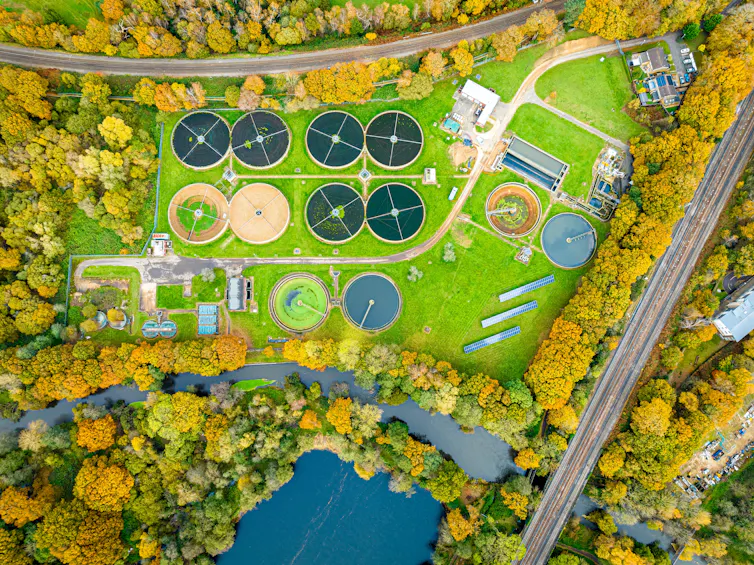
Everyone uses the toilet, whether they are ill or not, and whether or not they ever see a doctor. That makes wastewater a snapshot of a whole community.
During COVID, virus levels in sewage rose four to 14 days before confirmed cases did. For fungi, the evidence is still thin, and almost all of it concerns C. auris.
In southern Nevada in the US, researchers found it in 79% of wastewater samples over ten weeks, more often in areas served by healthcare facilities. In Florida, 47% of hospital wastewater samples tested positive, compared with 16% at treatment plants further downstream. In a UK hospital, the fungus was found in the wastewater coming from one particular ward during an outbreak.
Alexey Fedorenko/Shutterstock
These studies show that the fungus can be detected in wastewater. They do not yet show that sewage data can predict outbreaks. Nobody yet knows how much of the fungus each person sheds, so a sewage reading can’t be turned into a number of patients.
Genetic tests detect fungal DNA but can’t tell whether the fungus is alive or drug-resistant. Because many Candida species live harmlessly in people, simply finding one tells us little. Combining genetic tests with growing samples in the lab will be needed. And some fungi, such as Aspergillus, are inhaled and won’t pass through the gut, so sewage may not reflect those infections at all. Recent research picked up several disease-causing yeasts from wastewater sources, suggesting the approach could work beyond C. auris.
Wastewater treatment doesn’t remove every pathogen, while storm overflow pipes can release untreated sewage directly into rivers and the sea. C. auris has been found on remote beaches in the Andaman Islands, India, which suggests it lived in the environment long before it reached hospitals. In Hong Kong’s mangroves, all the multidrug-resistant yeasts researchers found came from sites near wastewater treatment works.
Low levels of antifungal drugs reaching rivers and soil may favour resistant strains. This link is possible but not yet proven.
Wastewater monitoring would not replace hospital testing of patients. Its value would be in telling health services where to look, especially in places where testing people at scale isn’t possible. Researchers now need to standardise methods, measure how much fungus people shed, and work out what sewage levels should trigger action. The goal should be to link wastewater data with hospital, animal and farm monitoring.
The tools already exist, as COVID showed. What has been missing is the will to prioritise fungi before the next resistant one outpaces us.

Pooja Padmakumar receives funding from Engineering and Physical Sciences Research Council (EPSRC) Digital Health Hub for AMR, project reference EP/X031276/1.