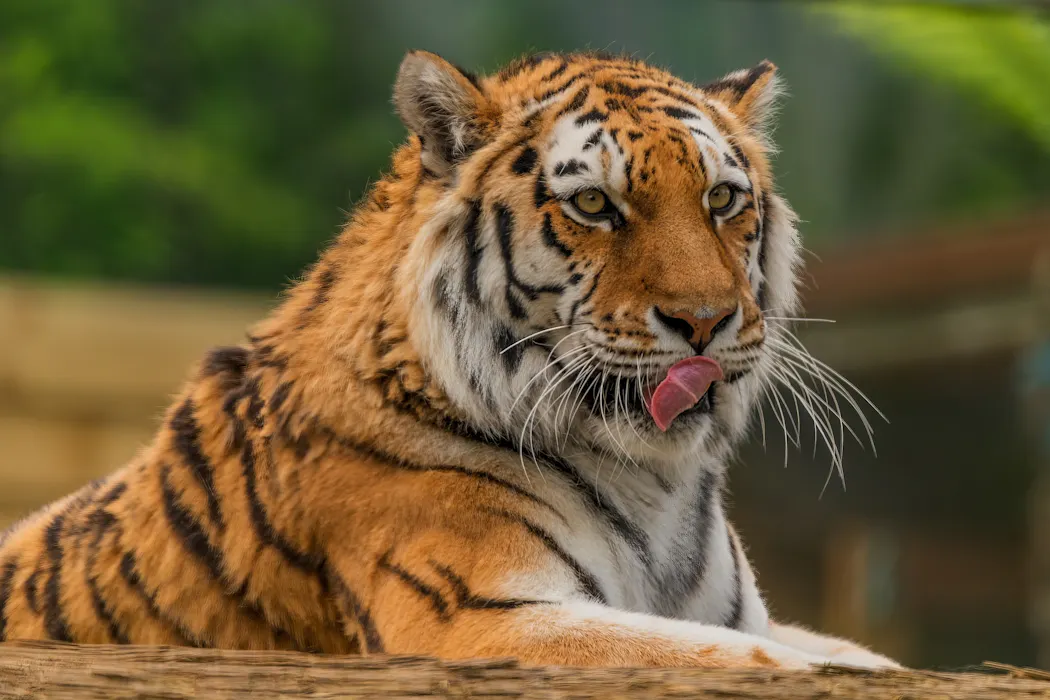
When an Amur tiger recently killed a man at Yorkshire Wildlife Park in northern England, the park announced that the tiger would not be killed.
Days later, a 71-year-old fisherman was killed by an alligator in Florida in the US. This time, the animal was captured and killed.
Two fatal attacks, but two very different responses. The distinction is not simply between a tiger in captivity and an alligator in the wild. It is about whether killing an animal can prevent further harm.
Sometimes removing a dangerous animal is necessary to protect human life. More surprisingly, it can also protect other wildlife, by preventing people retaliating against animals who weren’t involved in the original attack.
A tiger attacking someone who enters its enclosure is behaving like a tiger, and killing it would achieve nothing. Removing an animal posing an ongoing threat is different. But in Yorkshire, the tiger remains behind barriers designed to keep people safe. The fatal encounter needs investigating, but the problem was that a person got in, not that a tiger got out. Killing the tiger would not address any potential failures in enclosure security.
When killing is justified
The Florida alligator presents a different problem. There is no good evidence that crocodilians develop a particular taste for human flesh after an attack, but they can become accustomed to people and learn to associate human activity with food, potentially increasing the risk of further encounters.
Where an animal poses a continuing threat, removing it may be justified on safety grounds, although a fatal attack alone does not establish that killing it was necessary. For communities that depend on crocodile-inhabited rivers for fishing, washing or collecting water, simply telling people to avoid them may not be realistic.
In Borneo, a fatal attack by a false gharial, a large and threatened relative of crocodiles, prompted a search for the animal responsible. A large male was killed, but examination of its stomach failed to establish that it was responsible.
Following another fatal attack, a second false gharial was killed, this time with the victim’s remains in its stomach. No further crocodilians were killed following that incident.
The consequences of indiscriminate retaliation can be devastating. In 2018, after a man was killed by a crocodile at a breeding facility in West Papua, Indonesia, an angry crowd entered the facility and killed all 292 crocodiles kept there, including hundreds of animals that had played no part in the attack.
The danger of retaliation
When people fear that a dangerous animal remains a threat, the pressure to act can be considerable. If authorities fail to respond, communities may take matters into their own hands, killing animals uninvolved in the attack. Identifying and removing the responsible individual can sometimes prevent this escalation and protect other wildlife.
But targeted removal is not straightforward, not least because identifying the right animal can be difficult. In addition, involvement in a fatal attack does not necessarily mean an individual is unusually dangerous. The circumstances may explain what happened, and killing the animal may do little to prevent another attack.
Such retaliation is not confined to crocodiles. In India in 2024, villagers near Ranthambore tiger reserve killed a tiger following the death of a shepherd. That year, a leopard that injured four people in Karnataka, south-west India, was beaten to death by a crowd, despite wildlife officials attempting to capture it.
Retaliation also occurs when lions kill livestock. In Kenya in 2015, herders poisoned a cow carcass after lions killed their cattle. Three lions from the famous Marsh Pride died, along with 11 vultures.
The incident illustrates how livestock conflict can become a wider conservation problem. A timely, targeted response may be preferable to allowing fear and anger to escalate into indiscriminate killing.
Preventing conflict
Often, better barriers, safer access to water or changes in how people encounter wildlife offer more lasting solutions. Providing safe water, for example, reduces the need to enter crocodile-inhabited rivers. Killing an animal should never be a substitute for addressing the circumstances that made an attack possible.
For people living alongside dangerous wildlife, these are not abstract conservation dilemmas. Expecting communities to tolerate serious risks without effective protection is neither reasonable nor fair. Those communities also need a meaningful say in how dangerous animals are managed. Decisions made solely by distant authorities or conservation organisations can overlook both the risks people face and the practical options available to them.
Equally, killing an animal does not necessarily make anyone safer. Decisions should depend on whether removal is likely to reduce danger and protect other wildlife. Sometimes killing a dangerous animal is justified, not despite conservation concerns, but because of them.

Adam Hart does not work for, consult, own shares in or receive funding from any company or organisation that would benefit from this article, and has disclosed no relevant affiliations beyond their academic appointment.