When a dairy cow miscarries, a farmer loses far more than an unborn calf. Feed has been grown, land and water used, and greenhouse gas released during the cow’s pregnancy but milk production, a future animal and income will be lost.
One of the most important of these greenhouse gases is methane. Methane is produced by microbes within a cow’s stomach during digestion (known as enteric-methane) and most of it is breathed out into the atmosphere. Instead, healthier animals are more productive, so the amount of methane they emit is associated with more milk or meat, reducing the emissions associated with each litre or kilogram produced.
My research focuses on diseases in farm animals such as cows, goats and sheep. In a recent peer-reviewed journal paper, my team and I examined evidence from livestock systems around the world. We found that preventing disease can improve growth, milk production, fertility and survival, often lowering the emissions associated with each litre of milk or kilogram of meat. However, the available evidence is not yet strong or consistent enough for animal health to be included confidently in climate policy.
Studies investigating greenhouse gas emissions in livestock make different assumptions and usually use estimations rather than directly measuring them. Building on ongoing research supported by the Global Methane Hub (an international philanthropic alliance formed from more than 20 major climate foundations), we developed a new project called Halow (Health Approaches for Lowering Livestock Emissions). Recently approved as a major international research initiative of the Global Research Alliance on Agricultural Greenhouse Gases, it will test when improvements in animal health deliver genuine climate benefits.
There is no single way to transition to more sustainable livestock farming globally. Much of the debate in high-income countries focuses on eating less meat and dairy to reduce greenhouse gas emissions. However, in low- and middle-income countries, demand for milk, meat and eggs is growing while access to diverse diets remains unequal.
The priorities for food production vary across different parts of the world. Wealthier countries looking to reduce excess consumption and total emissions, while many poorer countries need to improve access to nutritious food without allowing emissions to grow at the same rate. Livestock also provide income, savings, manure and power for farming. Preventing animals from dying or producing far below their potential could provide more food and income from resources already being used. That makes animal health part of a fairer climate response, but is not a licence for unrestricted expansion of livestock numbers.
What the losses mean
We previously calculated the potential impacts of reducing calf deaths and reducing pregnancy loss in livestock in our Kenya and Tanzania study.
Modelling data from farms in northern Tanzania, we calculated that cattle miscarriage increased emissions per kilogram of milk by 4% in Indigenous cattle and 15% in higher-yielding cattle. Including the losses from both cattle and goats, the estimated milk and meat protein lost was equivalent to the current annual animal-protein consumption of about 649,000 Tanzanians.
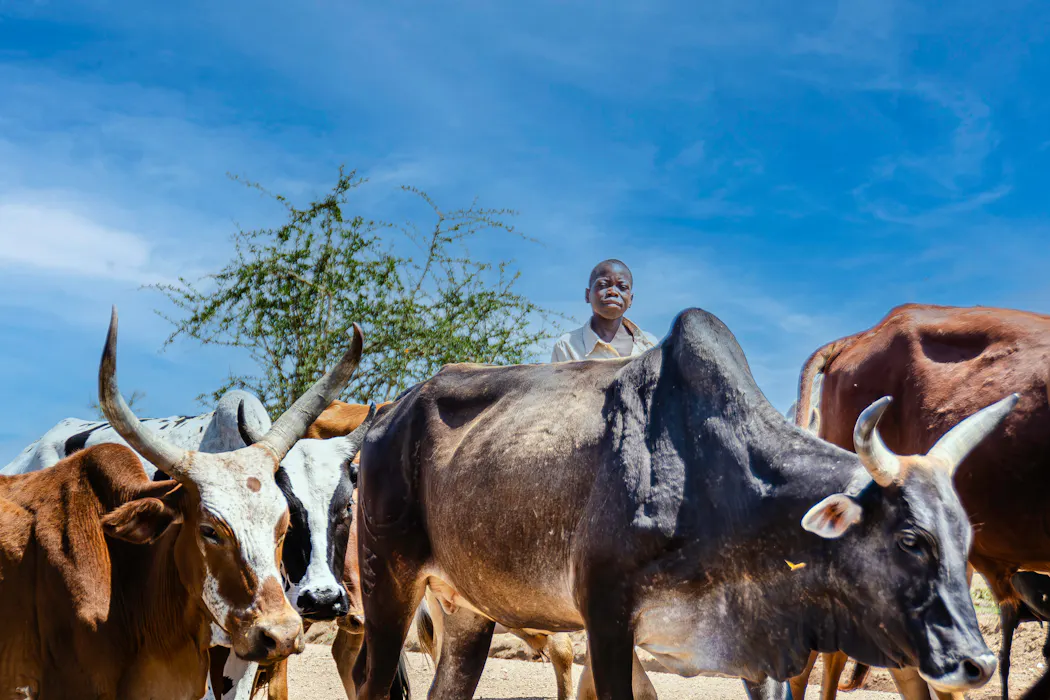
In the same paper, we looked at the productivity of local beef cattle in western Kenya, where 16% of calves died during their first year and most diagnosed deaths were linked to infection. At the current mortality rates, the protein loss was equivalent to the annual beef-protein consumption of about 4.5 million Kenyans.

travelview/Shutterstock
Halving mortality to 8% reduced estimated enteric-methane emissions per kilogram of beef by 3.2%. However, as more calves survived, the herd produced more beef but also more enteric methane in total. The footprint of each kilogram became smaller, while emissions to the atmosphere increased.
This is not an argument for allowing calves to die. It is an argument for measuring food security, livelihood and climate outcomes together rather than assuming that improved efficiency guarantees an absolute reduction greenhouse gas emissions from livestock.
From evidence to climate policy
Countries estimate livestock emissions from animal numbers and standardised figures. Better health can change milk yield, growth, fertility, mortality and the number of replacement animals needed, however existing methods don’t always capture these effects accurately.
The Halow platform allows scientists like us to compare interventions across farming systems. It enables researchers to evaluate which ones work, at what cost and whether they reduce total emissions or only emissions for each unit of food. It will consider who benefits and recognise that negative results will matter too.
Animal health will not solve the livestock sector’s climate impact on its own. However, leaving disease out of climate policy ignores emissions that don’t produce food or benefit livelihood. A fair livestock transition means reducing excess consumption where it is high, improving access to nutritious food where it is low, and cutting avoidable losses everywhere.

Nick Wheelhouse receives funding from Environmental Defense Fund and the Global Methane Hub. He is co-lead of the Animal Health and Greenhouse Gas Emissions Intensity Network of the Global Research Alliance on Agricultural Greenhouse Gases and contributed to the development of the HAlow Flagship. He also currently Chairs the Food Standards Agency Advisory Committee on Animal Feedingstuffs