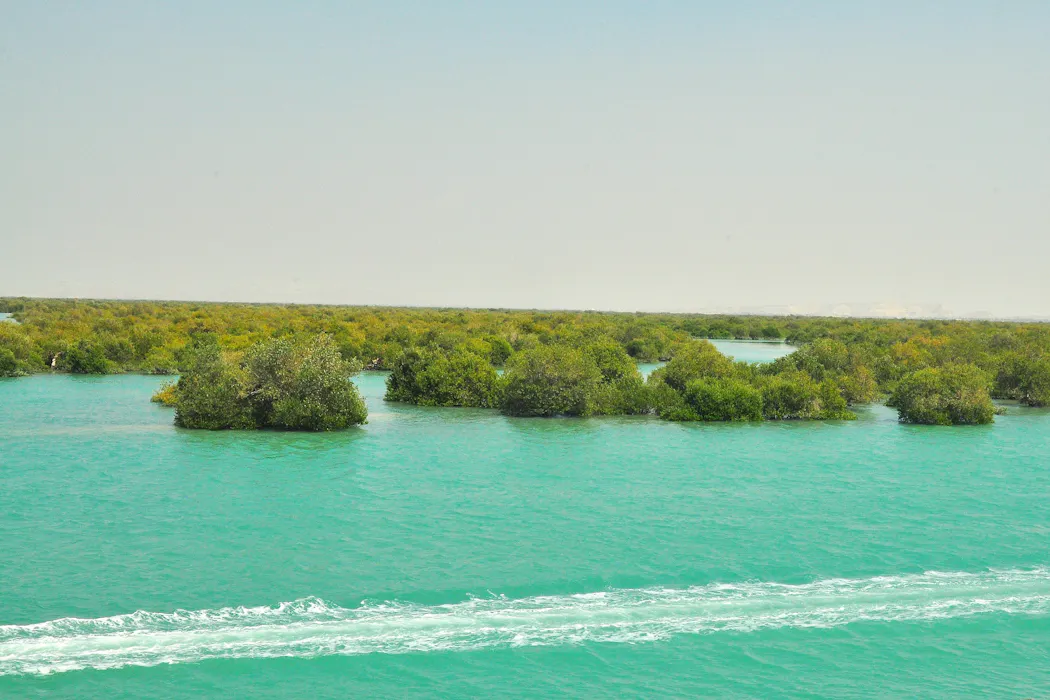
Oil slicks moving along Iran’s southern coast have reached the Hara mangrove forests of Qeshm Island. Iranian authorities say the extent of the contamination is still being assessed and the source of the oil pollution has not yet been established. But several oil spills have been detected in the region since the war between the US and Iran began.
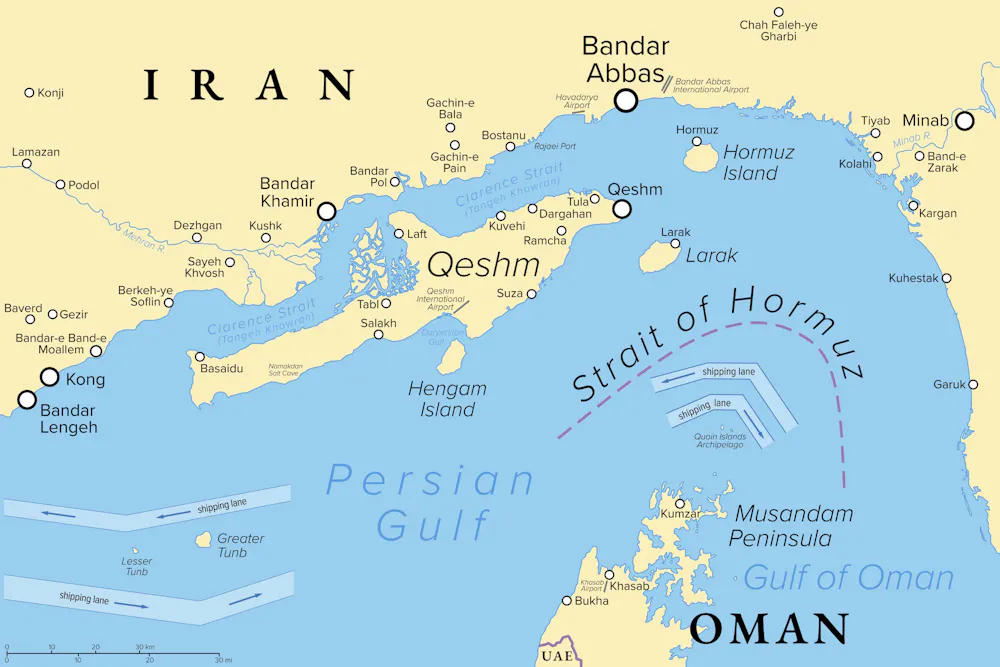
The Hara forests lie in the Khuran Strait, which separates Qeshm Island from mainland Iran. This waterway is close to the Strait of Hormuz – one of the most strategically important marine corridors on Earth. The Strait of Hormuz is normally discussed through the vocabulary of geopolitics: barrels of oil, shipping lanes, energy prices and global trade.
But beneath that geopolitical map lies another map that receives far less attention. The Strait of Hormuz and its surrounding waters are home to mangroves, coral reefs, seagrass beds, fisheries and coastal communities. They also provide the seawater upon which some of the world’s most water-stressed societies depend.
The Strait of Hormuz is not only an energy chokepoint. It is an ecological chokepoint. And prolonged conflict exposes both at the same time.
An oil slick on open water is a serious pollution event. But oil entering a mangrove ecosystem creates a different problem. Mangroves occupy the boundary between land and sea, with dense root systems that slow water movement and trap sediments.
The same characteristics that make these ecosystems extraordinarily productive also make them effective traps for pollutants.
While oil can be removed from the water surface, oil that penetrates shorelines and fine sediments can be much more difficult to address. Contamination can affect roots and seedlings and expose organisms living in or feeding on these sediments to pollution. Fish and birds can be affected through ecological pathways extending beyond the visibly contaminated trees.
Qeshm should also not be viewed in isolation. Earlier in the war, another oil slick near Kharg Island in the northern Persian Gulf was tracked. Satellite imagery indicated that currents were carrying contamination through the Khuran Strait towards the mangroves.
Researchers using satellite observations have also reported a marked increase in the frequency and extent of oil pollution in the Gulf since the beginning of the war. This is where the environmental significance of prolonged conflict becomes much larger than any individual spill.
What needs to happen now
The first priority in Qeshm must be containment. Preventing additional oil from entering the mangroves is far more effective than attempting to remove it once it has penetrated a complex inter-tidal environment.
However, containment alone is insufficient. Authorities need to establish the source and chemical characteristics of the contamination, map its spatial extent, combine field observations with satellite monitoring and sample water and sediments.
They will also need to establish baseline conditions in affected and unaffected areas and monitor mangrove condition, aquatic organisms and other ecological indicators over time.
Such efforts may themselves be constrained by the war. Conflict can make scientists, environmental agencies and emergency-response teams less able to reach the places where intervention is most urgently needed.
The response must also avoid causing additional damage. Following the 1989 Exxon Valdez oil spill off the coast of Alaska, high-pressure hot-water washing removed stranded oil but also caused substantial additional damage to shoreline organisms and habitats.
In mangroves, where roots and sediments are particularly sensitive to physical disturbance, similarly aggressive interventions can do more harm than good. Most importantly, monitoring of the Hara mangrove forests cannot stop when the coastline looks clean.
Peter Hermes Furian / Shutterstock
There is a temptation during war to treat environmental damage as secondary: something to assess after questions of military strategy, diplomacy, energy supply and economic loss have been addressed. That hierarchy is difficult to defend.
Environmental systems are infrastructure. Mangroves protect coastlines and sustain marine ecosystems. Fisheries support livelihoods and food security. Soils support agriculture. Aquifers store water and coastal waters feed desalination plants.
Healthy ecosystems provide forms of resilience that become more – not less – important during periods of political and economic instability. Destroying or degrading them thus creates liabilities that can persist long after military operations have ended.
And unlike a bridge, pipeline or building, an ecosystem cannot necessarily be reconstructed. A mature mangrove forest is the product of biological processes that unfold over time. Lost ecological functions may take years to recover, and some changes may prove difficult to reverse.
This is why what is happening at Qeshm deserves attention well beyond Iran. The question is not whether this particular oil contamination represents an ecological catastrophe. We do not yet have the evidence to make that judgment. The more important question is what the event is telling us.
It is telling us that in a region where enormous volumes of hydrocarbons, dense maritime traffic, critical water infrastructure and fragile coastal ecosystems occupy the same narrow geography, environmental risk cannot be separated from geopolitical risk.
If the Iran conflict continues, the probability of further accidents, infrastructure damage, pollution and interrupted environmental management will increase. Some consequences, such as burning vessels, blackened coastlines or dead vegetation, will be immediately visible.
But others will accumulate quietly – in sediments, soils, groundwater, food webs and stressed ecosystems. It is these consequences that may ultimately prove harder to repair. While all wars eventually end, their environmental consequences do not necessarily follow the same timetable.

Nima Shokri is affiliated with Hamburg University of Technology.