Pete Hegseth, the US defence secretary, recently announced plans to measure testosterone levels in US soldiers with a promise of “ensuring you have the right testosterone levels to operate at your absolute best”. Soldiers found to have low testosterone would be offered treatment, although accepting it would remain voluntary.
The announcement has reignited debate about testosterone, masculinity and performance. Here’s what testosterone can – and can’t – tell us about men’s health.
Testosterone is one of the most useful indicators of men’s health, but it is not routinely checked during health screening. Although it is best known for its role in reproduction, testosterone also helps keep muscles and bones healthy and plays an important role in metabolism. Large studies have found that men with lower testosterone levels are more likely to develop obesity, type 2 diabetes and heart disease. They are also more likely to become frail, report a poorer quality of life and die earlier than men with “normal” testosterone levels.
Read more:
Testosterone: why defining a ‘normal’ level is hard to do
Testosterone also declines gradually with age. However, this natural decline is usually small and, in otherwise healthy men, often does not cause medical problems until much later in life.
Far greater reductions are typically seen in men with obesity, type 2 diabetes and other chronic diseases, meaning testosterone deficiency often reflects unhealthy ageing rather than ageing alone – and the relationship runs both ways. Chronic disease can lower testosterone, while testosterone deficiency may itself contribute to poorer metabolic and physical health.
This is why testosterone is such a valuable biomarker. A low result may be a sign that something has changed in the body. But deciding what counts as a “normal” level is not simple. One man’s normal testosterone level may be much lower than another’s. So comparing a man’s current level with his previous results could be more useful than comparing it with a standard population range. This is one reason why checking testosterone more often could be useful.
The blood test itself is straightforward. The challenge is deciding what the result actually means. A testosterone test can provide useful information about a man’s health. But on its own, it cannot show how capable someone is as a soldier, who needs treatment or whether raising testosterone above an idividual’s natural level would improve their performance.
Any screening programme would also need to consider female service personnel. Testosterone is important in women too, but levels are around tenfold lower than in men and cannot simply be interpreted using the same approach. Women’s testosterone levels need to be assessed differently, using their own reference ranges and medical guidelines.
The military – a different population
Active-duty military personnel are generally healthier than the wider population, with lower rates of obesity and metabolic disease. However, testosterone concentrations in this group may be influenced by factors specific to military life, including prolonged physical training, inadequate recovery, disrupted sleep and psychological stress. The important question is not simply whether testosterone is low, but why it is low.
Crucially, testosterone should not be viewed as a simple measure of military capability. A soldier’s performance depends on many factors, including physical fitness, decision-making, resilience, mental health and the conditions they are working in. Testosterone is only part of the picture.
This does not mean testosterone has no role in performance. In men with genuine testosterone deficiency, testosterone replacement therapy can improve lean muscle mass and bone density, and may improve aspects of muscle strength, physical function and quality of life.
However, evidence that raising testosterone above an individual’s natural range improves performance in otherwise healthy men remains weak. Treating a medical deficiency is very different from trying to boost performance.
Marc Bruxelle/Shutterstock.com
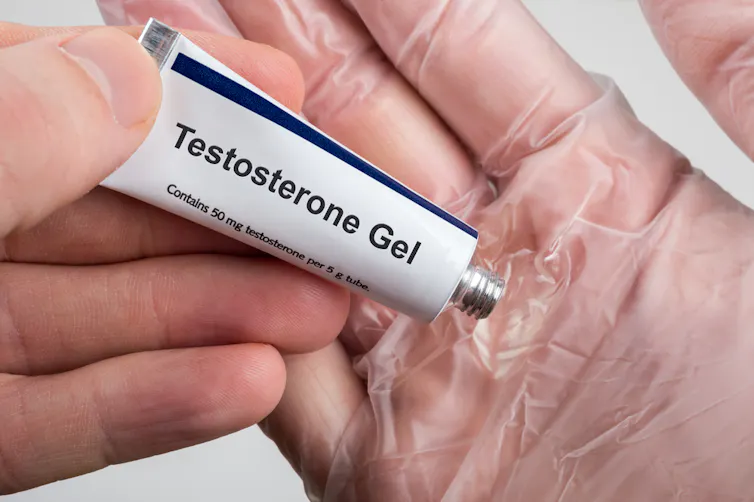
One of the most important distinctions in this debate is the difference between identifying low testosterone and treating it. Hegseth says any treatment would remain voluntary.
Some experts worry that testing soldiers could encourage the belief that a lower result requires correction – particularly in younger and otherwise healthy men. In an environment where physical capability and resilience are highly valued, simply being told they have lower testosterone could make some soldiers feel they should seek treatment, even when there is no clear medical reason.
Hegseth’s announcement also reflects a wider change in how people talk about testosterone, moving beyond its traditional medical role and into broader conversations around ageing, masculinity, performance and optimisation. This comes as regulatory views on testosterone therapy have also evolved.
Following a landmark study, the US Food and Drug Administration removed previous warnings on testosterone drugs about the risk of heart disease and stroke, while more recent proposed label updates have focused on updating advice about age-related testosterone decline and prostate health.
These changes should reassure men who genuinely need testosterone treatment. But they do not mean testosterone is a cure-all for better health or improved performance. Safe treatment is not the same as appropriate treatment. If low testosterone reflects poor sleep, excessive training, psychological stress or an underlying health problem, addressing those causes may be more beneficial than simply increasing testosterone levels.
Ultimately, Hegseth’s proposal highlights an important scientific question. Testosterone is a valuable indicator of men’s health and may deserve a bigger role in routine health checks. But it is only one piece of a much bigger picture. A blood test can show that something has changed, but it cannot explain why. It cannot, on its own, show how well someone will perform or whether they will need treatment. Those decisions require expert doctors to look at the whole person, not just a single test result.

Daniel Kelly does not work for, consult, own shares in or receive funding from any company or organisation that would benefit from this article, and has disclosed no relevant affiliations beyond their academic appointment.