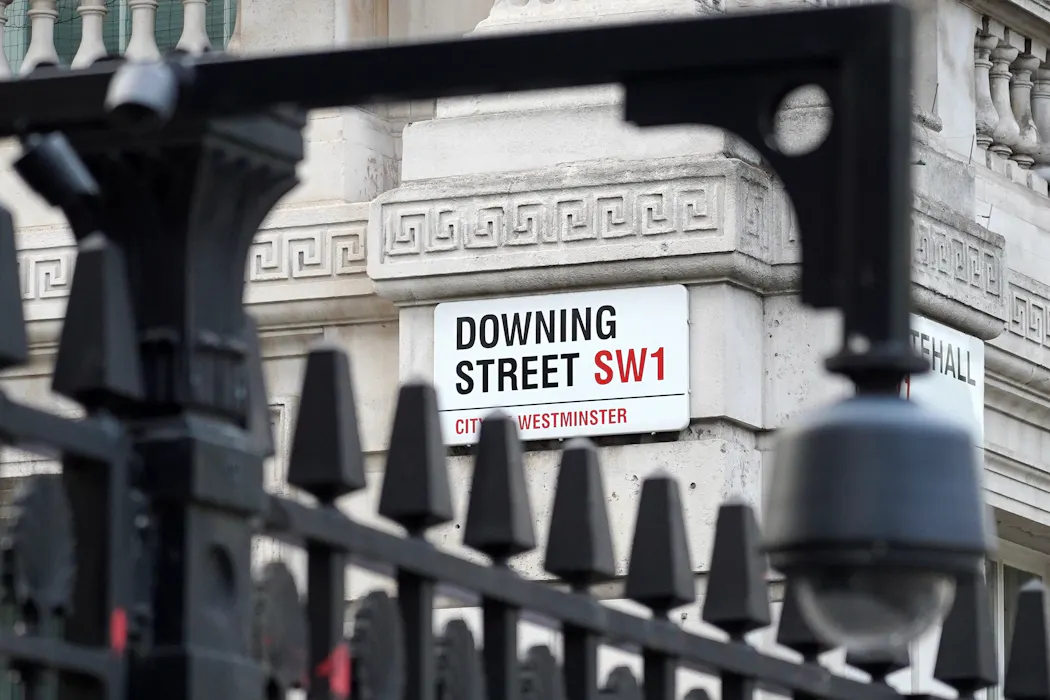
The UK is not usually thought of as the kind of country that’s prone to a coup d’état. Yet in the UK too, power can change hands without a general election. Boris Johnson, Rishi Sunak, Theresa May, Liz Truss – in each case, internal party dynamics determined who occupied 10 Downing Street.
In the current situation, all eyes are on the former mayor of Greater Manchester, Andy Burnham. It’s widely expected that Burnham will become prime minister through an internal Labour party manoeuvre rather than a general election. But this would reinforce the same uncomfortable point. The UK accepts major political transitions without the electorate ever casting a vote. Once again, the public may simply be expected to accommodate the outcome.
Read more:
Why is the UK now changing prime minister every few years?
Keir Starmer won a landslide in the 2024 general election. But dissatisfaction within the party and across the country soon led to grumblings, cabinet resignations and a collapse in the PM’s public approval. In such a trigger-happy system, any political misstep (or series of missteps) becomes potentially fatal.
Normalising hierarchy
So why do voters accept pressure from within a PM’s own party as legitimate grounds for removal? The answer may lie in psychology, namely the human tendency to justify existing systems, defer to authority and treat hierarchy as normal. Understanding that process is the first step towards challenging it.
“Social dominance orientation” describes a preference for social hierarchy, in which some groups are seen as more deserving of power than others. People higher in this tendency are more comfortable with unequal relations and more likely to support policies, institutions or leaders that preserve hierarchy rather than reduce it. In social psychology, this matters because hierarchy survives when many people come to see it as normal.
One reason for this is that hierarchical settings themselves can make inequality feel natural. Military organisations, policing, workplaces that are structured around hierarchies and elite educational systems all expose people to repeated signals that some voices matter more than others. Over time, this can make hierarchy seem less like a political choice and more like common sense.
That helps explain why internal party decision-making can sometimes be accepted by the wider electorate. When groups such as the 1922 Committee of backbench Conservative MPs (which sets out the rules for Tory leadership contests) or a party’s national executive use internal rules to shape leadership outcomes, their language and formality can create an air of authority. This may make many voters more inclined to accept it.
But this raises a deeper democratic question: if people simply absorb the outcome of these elite processes, how representative is that democracy really? One way of thinking about this is through voter apathy and disengagement, which can leave surrogate decision-making unchallenged.
There are ways to push back against this. Meaningful interactions between people from differing social groups (known in psychology terms as “high-quality inter-group contact”) can reduce support for hierarchies. This is especially true when it takes the form of genuine one-to-one contact, rather than just symbolic interaction.
And so can “cultural humility”: the willingness to recognise that we do not fully know other people’s experiences and should approach difference with respect, curiosity and awareness of inequality. These are practical ways of loosening the hold of hierarchy on politics.
Internalised classism adds another layer. This is the process by which people absorb negative beliefs about their own social group and begin to see themselves, or those like them, as less entitled to lead. That can make the acceptance of unelected elites easier, especially when those elites come from the upper classes. The privileged upbringing of Eton-educated Johnson, for example, did not prevent him from appealing to some working-class voters to win a general election in 2019 and lead the UK through Brexit.
Of course, the easiest way to alleviate internalised classism is for the governing party to change its rules to ensure that any new prime minister must be elected via a public vote, rather than leadership challenge. However, this small change would have a seismic effect and is unlikely to happen.
Ultimately, the strongest defence against unelected leaders is democratic accountability. That means questioning backroom power, reducing political apathy and encouraging citizens to care about who governs them and how. If democracies fail in this, they risk normalising elite rule and weakening the foundations of democratic life.

The authors do not work for, consult, own shares in or receive funding from any company or organisation that would benefit from this article, and have disclosed no relevant affiliations beyond their academic appointment.