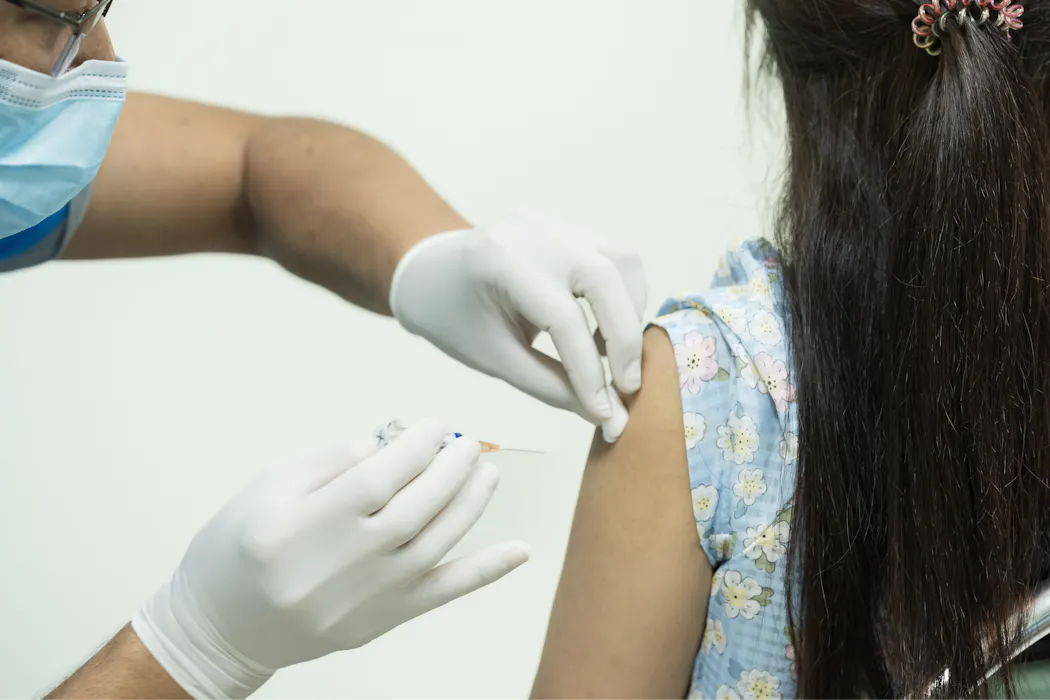
Human papillomavirus (HPV) vaccination is already saving lives in the UK – and the scale of that success is striking.
Among young women who received the jab as schoolgirls, there have been no recorded deaths from cervical cancer in recent years. Between 2020 and 2024, no woman in England aged 20 to 24 – who had been vaccinated as a teenager – died from cervical cancer.
A new study estimates that hundreds of deaths have already been prevented by the national HPV vaccination programme, with many more lives likely to be saved as the vaccinated groups age. For the first time, we have country‑level evidence that a vaccine given in adolescence is preventing young women from dying of cancer.
There is now more than a decade of evidence showing that HPV vaccination cuts cervical cancer risk. The UK introduced HPV vaccination for girls aged 12 to 13 in 2008, later extending it to boys, delivering doses mainly through school‑based programmes.
Uptake has been high, with close to 90% of girls in some age groups completing the course by their mid‑teens. The vaccine targets the strains of HPV responsible for most cervical cancers, and studies have shown dramatic reductions in both invasive cancers (cancers that can spread to surrounding tissue) and advanced precancerous lesions (cell changes that can develop into cancer) in vaccinated women. One large study compared vaccinated and unvaccinated women in their 20s. Those who received the vaccine at age 12-13 had 87% fewer cervical cancers.
These numbers translate into everyday realities. Cervical cancer often affects women in their 30s and 40s, but when it occurs in younger women, it can disrupt education, work, fertility and family life. Preventing even a single case means sparing someone the ordeal of invasive treatment and its long‑term consequences.
That the NHS now feels able to publish a plan to eliminate cervical cancer as a public health problem in England by 2040 speaks to the confidence in this trajectory. The aim is to make the disease rare, supported by high HPV vaccination coverage alongside screening.
Globally, the picture is similar wherever the HPV vaccine has been embraced. The World Health Organization wants cervical cancer eliminated as a public health problem worldwide, and has set a target: 90% of girls vaccinated by age 15.
The case of Japan
Yet the benefits we are seeing in the UK are not inevitable. They can be lost if public confidence collapses. Japan offers a stark example of how quickly progress can unravel when vaccine fears take hold.
Japan introduced HPV vaccination into its national programme in 2013 and initially achieved coverage of around 70% among eligible girls, comparable to levels seen in the UK. Soon afterwards, however, media reports began to highlight cases of girls and young women experiencing chronic pain, headaches and movement disorders after vaccination.
Although careful safety investigations failed to show that the vaccine caused these symptoms, the stories generated considerable public anxiety. Within months, the Japanese Ministry of Health suspended its active recommendation of the HPV vaccine. Technically, the vaccine remained on the schedule and parents could still request it – but without government endorsement, uptake crashed.
Among girls born in certain years, coverage fell from around 70% to below 1%, and it remained at that level for years. Because cervical cancer typically develops many years after HPV infection, the effect of this drop in coverage will unfold slowly.
A modelling study suggests this period of low uptake will cause tens of thousands of extra cervical cancer cases, and thousands of extra deaths, over the lifetimes of those affected. In other words, a preventable cancer is likely to re‑emerge, not because the vaccine is ineffective, but because too few young people received it.
Japan has since reinstated its recommendation for HPV vaccination and launched catch‑up campaigns for those who missed doses, but this can only partially close the gap. The most effective time to vaccinate is before a young person first has sex – a time when they are unlikely to have been exposed to HPV.
Catch-up vaccination in older teenagers and young adults still helps, but it can’t fully replace the protection of vaccinating on time.
The contrast between the UK and Japan underlines an important point: vaccines are biological tools that act within social systems, which determine how it’s promoted, who recommends it, and whether the public trusts it. Biologically, HPV vaccination works by preventing infection with cancer‑causing HPV types and blocking the long, silent progression from infection to precancer to invasive cancer.
Socially, it only works if enough people accept it, early enough in life, to stop the virus circulating widely. When uptake is high and stable, as it has largely been in the UK, the benefits can be remarkable: cancer rates fall, precancerous lesions become rarer, and in some young vaccinated groups, deaths drop to zero. When uptake collapses and stays low, as happened in Japan for several years, the burden of preventable cancer rises again.
For policymakers and health professionals, the lessons are clear. Communication matters as much as technology. Safety concerns must be taken seriously and addressed quickly, with transparent, evidence‑based information and robust monitoring systems.
For individuals and families, the message is reassuring. The HPV vaccine has now been given to hundreds of millions of people worldwide and has one of the strongest evidence bases of any modern vaccine. It reduces HPV infections, prevents precancerous changes and, as we are now seeing in the UK, can bring cervical cancer deaths in young vaccinated women down to zero.
Deciding to vaccinate a child has consequences that extend decades into the future. The choices we make now – to accept or reject vaccines, to maintain or undermine trust – will shape who develops cancer, and who does not, for years to come.

Justin Stebbing does not work for, consult, own shares in or receive funding from any company or organisation that would benefit from this article, and has disclosed no relevant affiliations beyond their academic appointment.