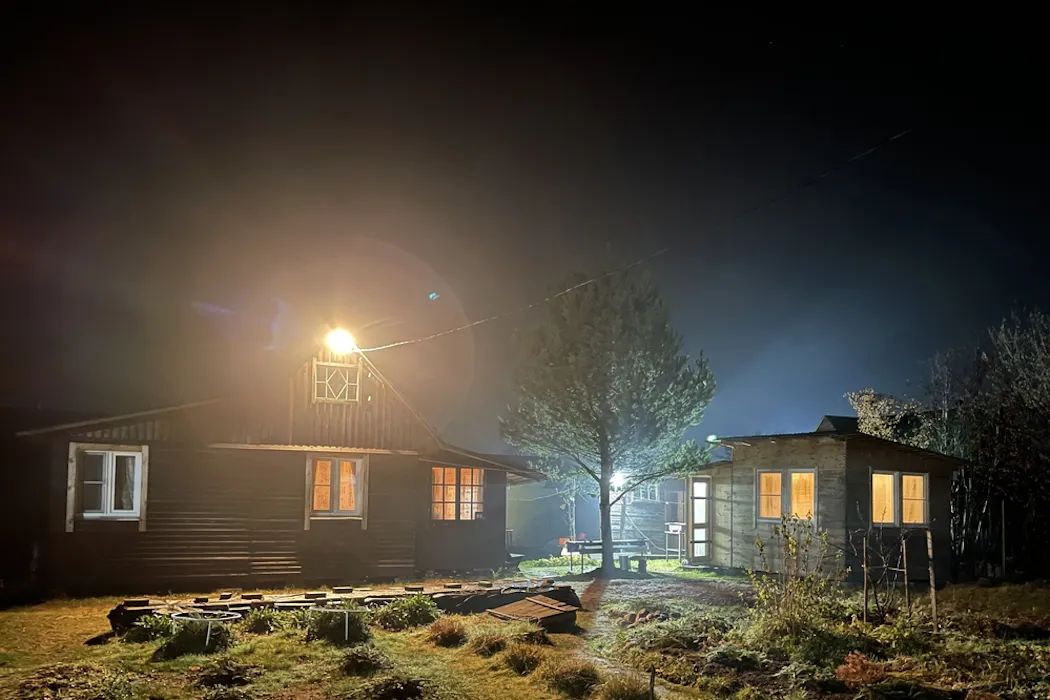
Growing evidence suggests that excessive outdoor lighting at night may be harming wildlife.
For generations, rural communities worked to the rhythms of daylight and darkness. Today, the amount of harsh light switched on at nightime is having profound consequences for many living things.
Agricultural properties are often remote and vulnerable to equipment or livestock theft. In response, many landowners have now installed security floodlights, powerful halogen beams, and unshielded external LEDs to illuminate yards overnight.
The North York Moors National Park, an international dark sky reserve in the north of England, has been working with farmers to reduce the impact of artificial light on the natural environment.
The initiative is about ensuring that lighting is used in the right place, at the right time, and at the appropriate intensity. This might involve installing downward-facing fixtures, reducing glare through shielding, or switching to warmer-coloured lighting that is less disruptive to wildlife.
The best places to start trying to reduce bright nighttime lights are those rich in wildlife, and farms in the park are often in the darkest areas.
Since 2021, the national park has worked with more than twenty farms in key dark sky locations, with many more projects in development.
Carefully designed lighting systems can use shielded or motion-activated lighting, which reduce impact on wildlife.

North York Moors National Park, CC BY
How does it affect the environment?
Over-illumination disrupts complex regional ecosystems, extending daylight artificially and changing the behaviour of animals that depend on natural darkness. Research suggests that light pollution caused by humans, harms ecosystems because of the critical role light has on the timing of biological systems, which artificial light disrupts.
Read more:
Why walking in a national park in the dark prompts people to turn off lights at home
The damage extends from the soil upward. Scientific research indicates that pressures on ecosystems due to habitat loss, pesticides, invasive species and light pollution could create a devastating decline in the insect population, with a knock-on effect on the food chain.
Benefits for farms?
There’s also evidence that suggests that changing lighting could help farms. This light disruption affects crucial agricultural allies. Moths, which serve as vital nocturnal pollinators, are heavily affected, alongside bats facing shrinking feeding grounds. Bats can help farmers control insect pests.
Artificial light exposure also alters vital plant cycles, for instance, and light at night can affect plant growth.
Small changes, such as switching to down-facing lights, can lead to significant environmental improvements.
Changing lighting around farms could also open up new tourism opportunities. Farms that also operate as B&Bs, for instance, can flag to tourists that they are part of a dark skies friendly community programme. This is an accreditation scheme for businesses that improve their lighting systems in accordance with international dark sky standards.
While UK national park authorities have powers to enforce planning restrictions on lighting, in places outside national parks, the UK lacks a comprehensive national regulatory framework to govern rural skyscapes.
The lesson in North Yorkshire and beyond is not that farms should switch off their lights. It is that lighting can be used responsibly to contribute to the stewardship of one of the countryside’s most valuable resources: the natural night sky.

The authors do not work for, consult, own shares in or receive funding from any company or organisation that would benefit from this article, and have disclosed no relevant affiliations beyond their academic appointment.