A new universal symbol for reuse aims to encourage the switch from single-use to reusable packaging and the development of a more integrated reuse systems worldwide.
Reuse systems reduce the use of virgin material, retain packaging materials within the economy for as long as possible, and will help dramatically reduce plastic waste and associated pollution by 2040.
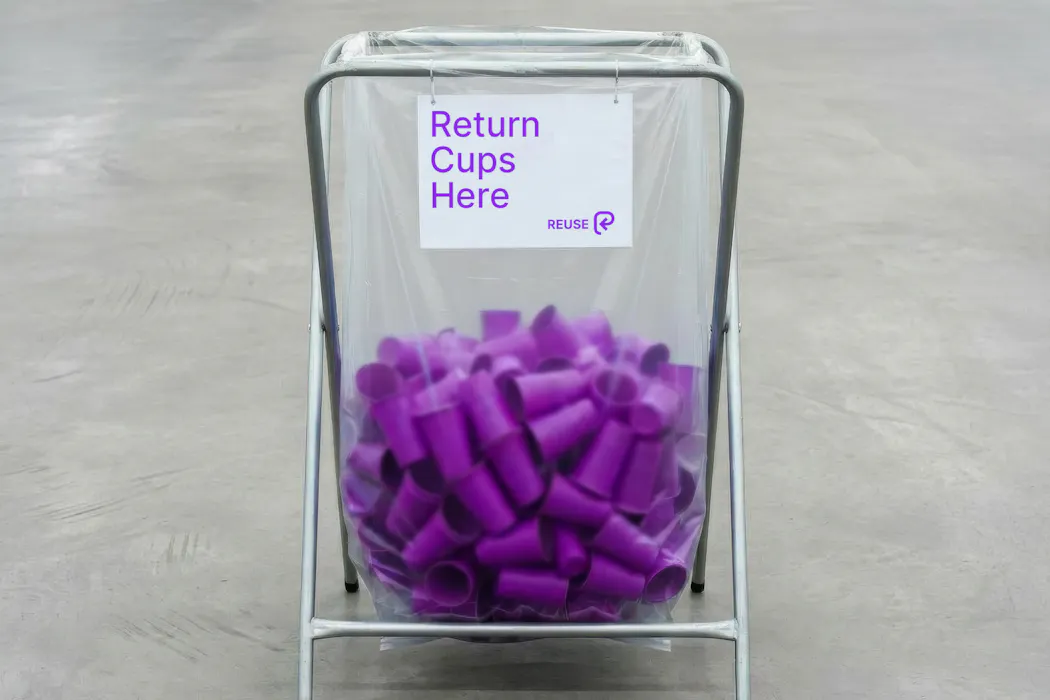
The introduction of this symbol on a diverse range of reusable products (such as cups, foodware, to-go containers, wine bottles and cleaning products) goes hand-in-hand with new reuse infrastructure. This includes collection bins, delivery vehicles, marketing material and signage. Together, this helps create more obvious and accessible reuse networks across whole towns and cities.
Research undertaken with our colleagues at the University of Portsmouth’s Revolution Plastics Institute has identified that a systems approach to reuse is the key to success at scale. A systems approach involves transformative change that tackles the root causes of a problem, rather than just dealing with the symptoms of an issue. So by shifting how we govern, as well as industry and habits, deeper change can be achieved.
While momentum for reuse is gaining traction across the globe, progress is constrained by fragmented policies to address plastic pollution, lack of investment in alternatives to recycling and gaps in infrastructure that enable reuse.
The new bright purple symbol is the result of a year-long global design initiative led by an international environmental organisation PR3: The Global Alliance to Advance Reuse to promote circularity across various sectors.
As one of the judges on the jury panel, I (Cressida Bowyer) assessed 236 designs submitted from 29 countries as part of PR3’s open call to create a global icon for reuse systems. In 2025, the expert panel assessed each design for criteria such as distinctiveness, recognisability, how memorable it was and cultural adaptability.

Rebrand Reuse, CC BY-NC-ND
The symbol needed to be clearly distinguishable from the recycling chasing arrows logo. Following several rounds of jury review, a shortlist of symbol designs was market tested in 17 countries. The winning design, produced by a creative agency in Colombia called Epigramma Studios, captures and communicates the spirit of reuse.
To avoid any risk of greenwashing, the use of the new symbol will be tied to PR3’s marking and labelling standards. Brands and organisations using the symbol must agree to abide by criteria outlined by PR3’s global standards.
This ensures that the symbol can only be used for packaging and infrastructure operating within reuse systems that encompass the full life-cycle of collection, transport, sorting, washing and return. The global standards have been developed with input from more than 80 organisations representing industry, government, environmental campaign groups, reuse operators and civil society.
Coupling this new visual marker with robust global standards will address some of these shortcomings, plus build trust, understanding and adoption among consumers. With consistent use, this symbol can make the identification of reusable products much easier across sectors and regions, and support the scale-up of reuse systems.
Moving on from recycling
For decades, the green chasing arrows recycling symbol has dominated as visual shorthand for environmental responsibility. Printed on packaging, adverts, bins and household products, it has provided consumers with a simple and widely recognised signal of how to “do their bit” for the environment through more responsible consumption and disposal.
However, the success of recycling messaging has led many people to overestimate its environmental impact relative to other more effective actions.
The waste hierarchy is a globally recognised framework that ranks waste management options according to what is best for the environment. It ranks waste prevention as the top priority, followed by reuse, recycling, material recovery and finally disposal.

VectorMine/Shutterstock
Recycling is a relatively resource-intensive way to manage waste that sits below reuse in terms of environmental benefit. But people often assume recycling is the most effective way to manage waste. Reducing the amount of material entering the system in the first place, such as through reusable packaging, remains the most effective strategy.
Plastic consumption is expected to triple by 2060. Yet recent evidence suggests that despite most household plastic carrying a recycling symbol, only 16% of UK household plastic packaging is actually recycled. Most (59%) is burned in the UK, while 16% is exported overseas and a further 9% is sent to landfill.
Why symbols matter
While policy and infrastructure are essential to reducing waste, behavioural science shows that people rely heavily on visual cues when making everyday decisions. Symbols reduce mental effort and help people navigate complex systems quickly and intuitively.
A reuse symbol could play an important role by making reuse visible and helping to shift perceptions of what environmentally responsible consumption looks like. With support from government and industry, it could help reinforce reuse as the primary mode of consumption and packaging use, with recycling repositioned as a lower-priority option within the waste hierarchy.
However, symbols alone are not sufficient. Reuse depends on supporting infrastructure, regulation and viable business models. Without these, even well-designed systems struggle to scale.
A reuse symbol is not a solution in itself, but a coordination tool. It can help align consumer behaviour, business practices and policy around a shared visual language.
If the recycling logo defined an era of waste management, a reuse symbol could help define what comes next: shifting focus from managing waste after it is created to designing it out altogether.

Cressida Bowyer receives funding from the Arts and Humanities Research Council (AHRC), the Medical Research Council (MRC), the Economic and Social Research Council (ESRC), the Wellcome Trust, the Sustainable Manufacturing and Environmental Pollution Programme (SMEP) and the Flotilla Foundation. She is a member of the British Plastics Federation Sustainability Committee. Cressida served on the jury panel for the PR3 Rebrand Reuse design initiative.
Kate Whitman does not work for, consult, own shares in or receive funding from any company or organisation that would benefit from this article, and has disclosed no relevant affiliations beyond their academic appointment.