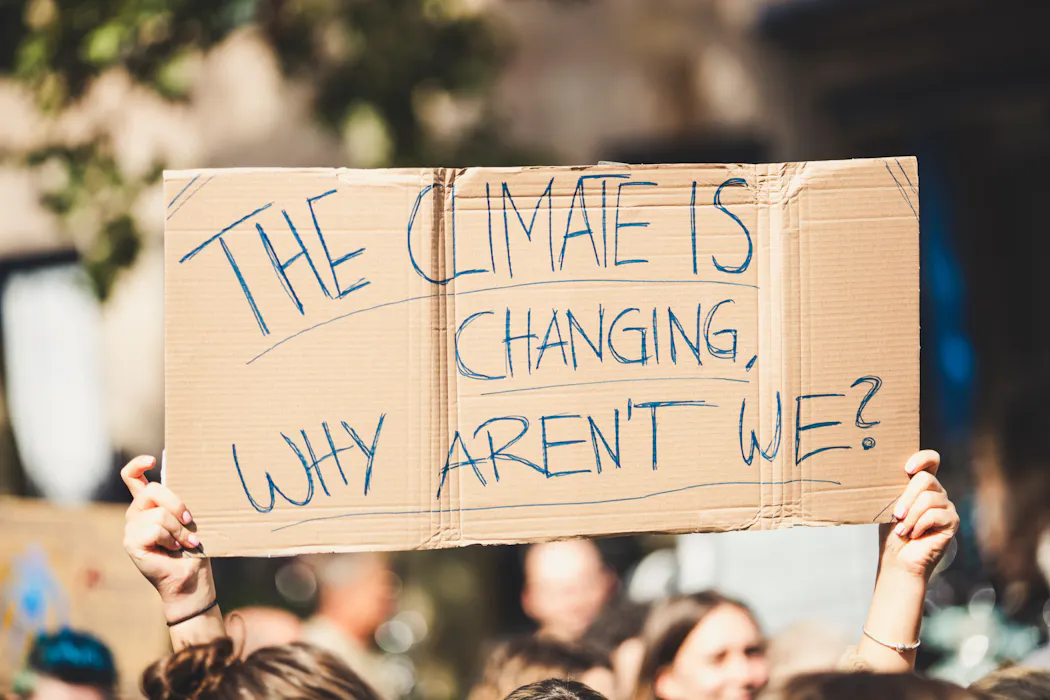
Go vegan, ditch the car, avoid air travel. Or forget all that – because it’s corporations and governments that are really to blame. This argument can feel quite paralysing but what if this is the wrong debate to be having?
Our research shows that the most effective approach to climate action is for people to make change within societal systems, not just as consumers. After all, what are systems made of if not people? Harnessing this agency to shape institutions, norms and networks will unlock broader social and structural changes.
We’ve developed a way to help you find your highest-impact actions, based on who you already are and what you can realistically do. It starts with three questions. Which roles do you already occupy? Within those roles, which actions carry the most climate weight? And what’s holding you, or others, back from taking them?
In our new research paper, we focus on five roles identified in previous research that link personal action with the potential for system change: citizen, professional, investor, consumer and role model. Previous work has prioritised a handful of high-impact actions within each role, such as using your vote as a citizen to elect leaders who will make strong climate policies, or by divesting from fossil fuels as an investor.

Icons from 140 Free People Icons for Diverse & Inclusive Designs [Free Download]. (2022, November 16). Venngage. https://venngage.com/blog/free-people-icons, CC BY-NC-ND
Climate action goes way beyond consumption. By identifying the most effective actions within your current roles, and overcoming barriers for you and others to take them, you can unlock the potential of your biggest leverage.
Consider a community member: someone who simply lives somewhere and knows their neighbours. They might not think of themselves as a climate changemaker at all. Yet they can organise others to campaign for low-carbon infrastructure, or speak up for those who face risks in being vocal. Or take a hospital procurement officer: by shifting institutional catering towards plant-based options or selecting renewable energy providers, they shape the choices available to dozens or hundreds of colleagues, influencing supply chains and shifting perceptions of what’s normal and doable along the way. And someone who discovers their pension is funding fossil fuels can push their employer to offer ethical options to all staff, not just those who are in a position to ask.
Read more:
Climate change: yes, your individual action does make a difference
The framework works at every level of influence, from a community member to a CEO. Those in high-leverage roles have multiplier effects. This happens when an action they take, such as implementing climate into school curricula, can extend well beyond their own choices, in this case by enabling children to have conversations about climate with their friends and at home. However, not everyone has the same responsibility or leverage to act.
In previous work, we showed how inequality constrains many people’s capacity to participate in climate action, whether that’s sustainable investing, protesting, or simply having the resources to make different choices. The same people with the most freedom to act often have the biggest footprints.
Read more:
Society needs a systems update to cope with climate crisis – my new film explains why
In the UK, one-third of people take more than 80% of all flights, while half the population doesn’t fly at all. Positions of privilege and leverage are not evenly distributed, so different people will have varying levels of influence. But if you are a frequent flyer, taking responsibility might mean recognising your unequal impact on the planet, reducing your flights and advocating for flying to pay its climate costs.
Climate paralysis often comes from feeling powerless in the face of vast systems. But perhaps the most important insight from our work is this: systems are made of people, and people have roles, choices and influence that extend well beyond their shopping habits.

Charlotte A. Kukowski receives funding from the Swiss National Science Foundation.
Kimberly Nicholas does not work for, consult, own shares in or receive funding from any company or organisation that would benefit from this article, and has disclosed no relevant affiliations beyond their academic appointment.