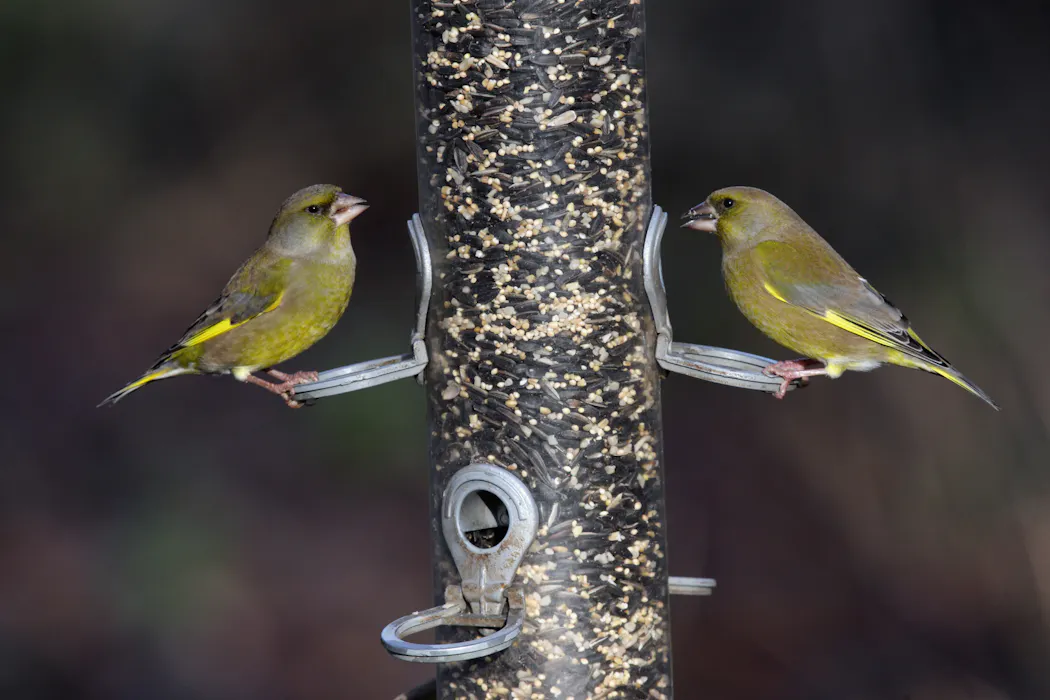
The outbreak of a mysterious and deadly disease in finches in British gardens in 2005 set alarms bells ringing for conservationists. A decade later, the extent of that disease in greenfinches and chaffinches was reported. And now, bird scientists are beginning to understand how feeding birds in our gardens might be linked to their health and survival.
Major new guidance on bird feeding released by the UK’s largest nature conservation charity, the Royal Society for the Protection of Birds (RSPB), asks that we feed birds seasonally and safely.
Feeding birds in gardens is helpful, especially during winter when birds might be facing food shortages. But summer feeding should be paused because this is a time when natural food sources such as caterpillars, bugs and flies are much more abundant. In summer, the benefits of feeding the birds are less obvious. Limiting summer bird feeding also limits the spread of disease, which happens more prominently when birds gather in numbers to share food and water.
Scientists now know that the disease detected in finches in the 2000s is trichomonosis, caused by a microscopic parasite called Trichomonas gallinae. It typically infects the bird’s throat and has been known for many years to affect pigeons and doves, along with birds of prey. Birds can act as carriers or succumb to the disease. Quite how this parasite spilled over into finches is uncertain, but probably happened through the sharing of food or water.
Studies show that this parasite can persist in moist bird feed for up to five days and in water up to 30 hours, especially in milder conditions. July to October is the peak time for disease outbreaks in finches.

Ballygally View Images/Shutterstock
The disease causes lesions in the bird’s throat that interfere with its ability to swallow. This causes the bird to regurgitate food and water, and eventually die. It can spread between birds when they feed one another during courtship, when feeding chicks or through regurgitation at food or water sources in gardens. Poorly birds appear fluffed up and lethargic. Some may have messy or wet feathers around their beak and often shake their heads as they try to swallow. It’s a sad sight.
Trichomonsis has had devastating consequences in bird populations across the UK and into mainland Europe. Greenfinches and chaffinches have been hit hardest. Greenfinch numbers are down by 65% and chaffinch down by 36% since 1995.
Bullfinches also catch this disease and die, and a range of other birds may contract the disease – some of which are already declining in numbers.
Without urgent action, the situation will probably get worse for these and other birds, especially when facing a myriad of other pressures. These include the loss of natural habitats, limited food availability, plus accelerating climate change.
The new guidance from the RSPB comes on the back of a detailed review of the effects of bird feeding that includes both bird survival from one year to the next and their breeding success. The review also considers the human benefits to bird feeding, and takes into account recent field studies of the disease and how to curb its spread. Most research has been conducted in natural settings such as woodlands, rather than residential, urban or suburban settings. But the key insights are clear.
The review found that feeding can boost bird populations. But there are two big concerns for conservation around garden bird feeding. First, increased disease transmission (as shown by trichomonosis and other diseases). Second, while many bird species have benefited from garden feeding, this may have come at the cost to others.
A 2009 study found that an estimated 12.6 million UK households (48%) provided supplementary food for birds of which 7.4 million used specially designed bird feeders. As demand increases, so too does the range of different bird food and feeders.
This popularity has upsides and downsides for different birds, but probably has strong benefits for our own connection to nature, wellbeing and health.
Birds that use feeders, such as greater spotted woodpeckers, wood pigeons, collared doves, great tits and blue tits have all increased their numbers dramatically in the long term. Yet, as their numbers have grown there is an increasing nervousness from conservationists that they might outcompete or predate more vulnerable species. Blue and great tits often take over and evict the endangered willow tit from their nest holes, and willow tits are preyed upon by great spotted woodpeckers. Further research will shed light on these complex interactions.
How to help
Two simple shifts can ensure we feed birds seasonally and safely.
During summer and autumn, there’s a higher risk of disease spreading. It’s also when there are more natural foods available to birds, so pause feeding any seeds or peanuts between 1 May and 31 October. You can continue to offer small amounts of mealworms, fat balls or suet, as they pose less risk of transmitting disease. Also consider bird-friendly planting to provide natural food sources, such as sunflowers, teasels and ivy.
Between 1 November and 30 April, you can feed with a full range of bird foods, including seeds and peanuts, but feed in moderation so food doesn’t spoil and large flocks of birds are not attracted to one location. Little and often is good.
Other guidance encourages good hygiene to minimise the risk of disease. Ideally, clean bird feeders and water baths at least once a week. You can change the water in bird baths every day and move bird feeders to different spots every week. Instead of using bird feeders with flat surfaces, such as bird tables, window feeders and feeders with trays, opt for hanging bird feeders to reduce the risk of spreading infections.

Richard Gregory works for the Royal Society for the Protection of Birds (RSPB) as the Head of Monitoring Conservation Science.