The war in Iran has led to a global energy crisis. Shipping traffic through the Strait of Hormuz, a major energy chokepoint that handles roughly 20% of the world’s oil, has been largely blocked by Iran since hostilities broke out in late February. This has, at times, caused oil prices to rise above US$100 a barrel.
As the primary customers of Gulf energy, Asian economies are being hit particularly hard by this crisis. According to figures published by the International Energy Agency in 2025, around 80% of the oil and petroleum products and nearly 90% of the LNG that transited the Strait of Hormuz that year were destined for Asia.
Not all countries in Asia are equally vulnerable. Those most exposed to energy market disruption share a set of structural characteristics: heavy reliance on imported fossil fuels, limited fiscal space and constrained energy systems that make it difficult to switch to alternatives quickly.
Countries such as Bangladesh, Pakistan and Sri Lanka are all heavily dependent on imported oil and gas to meet domestic demand. However, they lack the foreign exchange reserves needed to secure energy supplies in volatile global markets. When prices spike or supplies tighten, these economies are forced into painful trade-offs between energy access, inflation and fiscal stability.
Wealthier Asian economies such as Japan, South Korea, Hong Kong and Singapore have greater financial resources, granting them superior purchasing power in volatile markets. But they, too, are structurally exposed to global energy crises. Their energy systems are also deeply dependent on fuel imported from the Gulf, which leaves them sensitive to supply disruptions.
These countries have the fiscal capacity to maintain strategic energy reserves, providing them with temporary relief from disruption. Japan and South Korea, for example, have both initiated record-breaking releases from their state oil reserves since the start of the Iran war.
But with the exception of China, which has huge stockpiles of oil and LNG as well as robust domestic energy supply, these reserves are not designed to offset prolonged disruptions. Japan and South Korea’s national stockpiles only hold enough oil for around 200 days.
Governments under pressure
Faced with tightening supplies and rising prices, many Asian governments have moved quickly to curb energy demand. One of the most immediate responses has been to limit mobility. The Philippines, Pakistan and Sri Lanka have all introduced four-day working weeks or have extended public holidays to cut commuting and fuel use.
Pakistan has also introduced hybrid working arrangements for public-sector employees, encouraging remote work to reduce transport demand. Education systems have been similarly affected. Bangladesh brought forward Ramadan holidays in universities, while Pakistan closed schools for two weeks from March 10 and shifted higher education online.
In some cases, governments have introduced more direct restrictions. Myanmar’s military leaders have imposed fuel rationing and have restricted private vehicle use to alternating days based on licence plate numbers.
Other interventions have focused on managing demand in less disruptive ways. Thailand, for example, has raised recommended air-conditioning temperatures to 27°C and is encouraging energy-efficient workplace practices such as replacing suits with short-sleeved shirts.
Some Asian governments have turned to subsidies to shield households and businesses from rising energy costs. Indonesia has allocated tens of billions of US dollars to maintain affordable fuel and electricity prices, while Thailand has capped cooking gas prices and promoted alternative fuels such as biodiesel.
However, subsidies are proving difficult to sustain. For lower-income countries in particular, fiscal constraints limit how long such support can be maintained. Pakistan initially introduced targeted subsidies for farmers and the transport sector, but has been forced to scale them back as the crisis has continued.
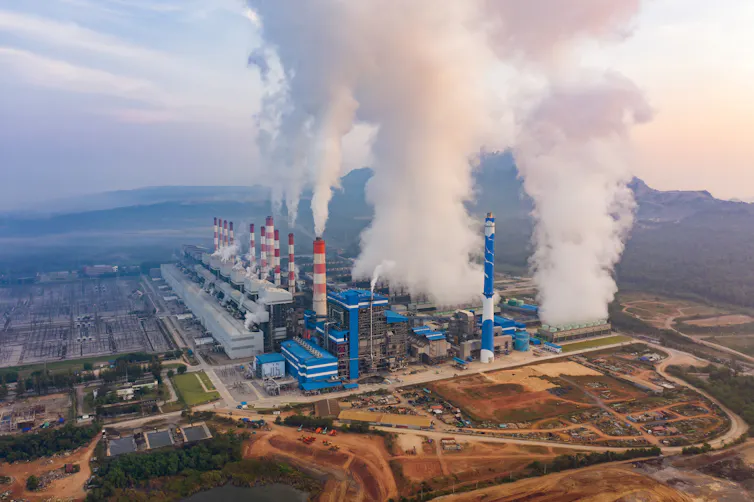
Perhaps the most consequential response has been in Asia’s power sector. As energy supplies have tightened and prices surged, several Asian countries have reverted to coal – a fuel many nations have been phasing out.
Thailand has restarted two decommissioned units at the Mae Moh coal-fired power plant, while South Korea and Japan have lifted restrictions on coal generation to allow older plants to operate at higher capacity.
Tavarius / Shutterstock
The current energy market disruption has exposed structural vulnerabilities in Asia’s energy systems, including import dependence, limited diversification and fiscal constraints. Governments have relied on a mix of demand reduction, subsidies and fuel switching to limit the impact.
However, these are stopgap measures. If disruptions persist, these countries may be forced to rethink their energy strategies more fundamentally. This could accelerate investment in renewables and nuclear power, as well as efforts towards regional energy integration. But it also risks entrenching coal use and, in the process, hindering global climate goals.
Either way, the current crisis is a reminder that energy security and economic stability remain tightly intertwined and that disruptions in a single chokepoint can ripple across the global economy.

The authors do not work for, consult, own shares in or receive funding from any company or organisation that would benefit from this article, and have disclosed no relevant affiliations beyond their academic appointment.