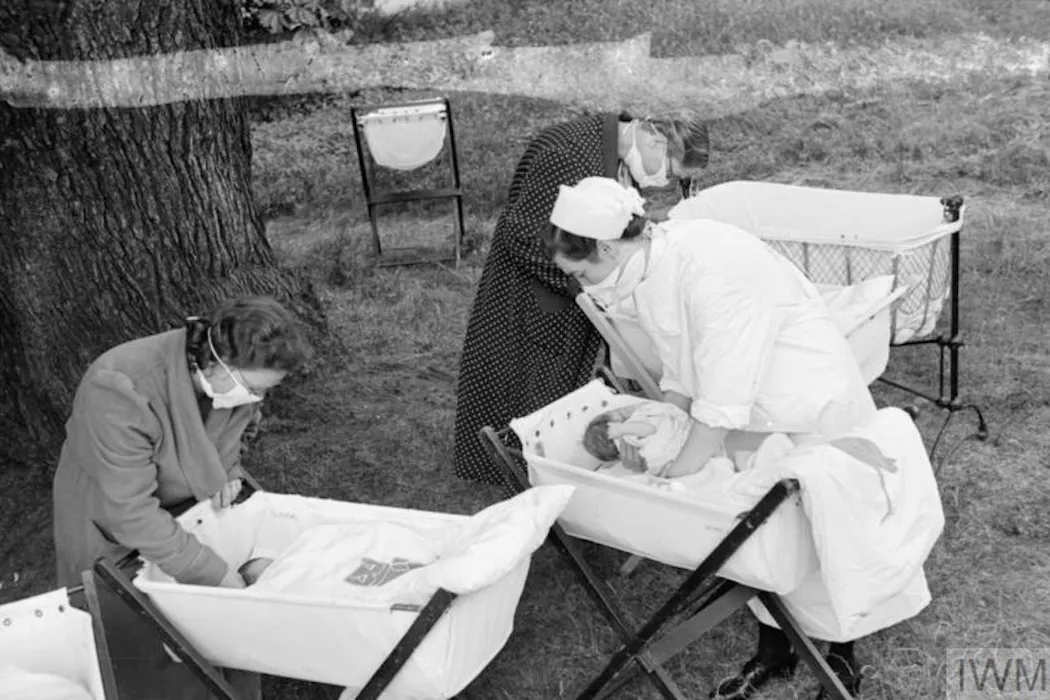
British prime minister Keir Starmer has apologised in the House of Commons for historical forced adoptions in England.
Mothers and adult adoptees directly affected by these practices were present in the gallery. In his apology Starmer praised their courage and resilience in steadfastly campaigning for truth and justice, and described what they faced as “a stain on our history”.
“To all those impacted and affected,” he said, “I say this: the shame is not yours. The shame was never yours. The shame is ours.”
As Starmer recognised, this formal apology follows earlier attempts by governments in Scotland, Wales, Northern Ireland and the Republic of Ireland – and beyond – to address this traumatic history.
During the three decades following the second world war, historians estimate that between 300,000 and 500,000 children in the United Kingdom and the Republic of Ireland were removed from their mothers. Most of these women were single, and their children were put up for adoption without their free and informed consent.
While an apology is to be welcomed, campaigners and scholars alike highlight that it is long overdue. A culture of shame rooted in Catholic, Protestant and other religious traditions, and dating back to the 19th century, endured throughout the 20th century. Our research shows this was not just discriminatory but also costly and damaging to all affected families. As Starmer acknowledged in his statement, authorities used their power to exploit vulnerable women and their infants.
William Murphy/flickr, CC BY-SA
History of shame
The welfare model that emerged in Britain and Ireland in the post-war era was inherently gendered. Women and children qualified for support only as the wives, widows or children of male breadwinners. This was reinforced by an economic system that prioritised that male breadwinner making it virtually impossible for women and single mothers in particular to be financially independent through their own earning power.
Governments in the UK and Ireland failed to provide housing and financial support to single mothers, or, as they were then called, “unmarried mothers” and their so-called “illegitimate” children. These terms were intended to convey the stigma attached to sex outside marriage. Only the woman, however, bore the shame of any resulting pregnancy.
Single mothers were cast as a danger to the moral and economic fabric of society. Sending many of them to institutions to birth their babies and have them adopted was imbued with a strong moral force. Secrecy was important in protecting this system, reinforcing the woman’s shame, and rendering her “readmission” into society contingent on compliance.
In 1943, the UK Ministry of Health introduced subsidies for mother-and-baby homes in England; in Scotland, this came into effect the following year. Recipients included homes run by religious and secular groups, as well as registered adoption societies. As a result of the funding, more homes were established. The adoption workforce grew in stature. The number of adoptions rose.
In Ireland, the mother-and baby-homes were largely run by Catholic groups, or, when Protestant, by lay groups. These institutions were funded by public monies, charity and the unpaid labour of the mothers.
Such networks of control crossed borders and were firmly embedded throughout multiple religious, political (state and local) and social structures. The UK and Irish governments were happy for the welfare of these vulnerable women and children to be deemed a moral and religious issue. They offered some funding, but little oversight.
By the 1950s adoption was the preferred official solution to illegitimacy. The rights of the adoptive parents to be parents were prioritised over those of the birth mothers and their babies, who began to be framed as delinquent, selfish, welfare “spongers”.
Enduring stigma
In 1972, Ireland introduced a small unmarried mothers’ allowance. This was prompted not out of any new moral clarity, but the desire to discourage women from seeking abortions in Britain. The first legislation to provide unmarried mothers with the legal right to housing and a non-means-tested state benefit for one-parent families was introduced in England and Wales in 1974, and in 1977, in Scotland.
By the 1980s, for various reasons, adoption rates declined in all these countries. Since then, the numbers of one-parent families have increased considerably. Data from the Office of National Statistics shows that in 2021, 15.4% of children in the UK were raised by lone parents; in Ireland that rate was up to 25%.
The majority of one-parent families have always been be female headed. Scotland has the highest rate at 92%; in England and Wales, Northern Ireland and the Republic of Ireland, the percentage hovers around 86%. Female-headed families have been economically, socially, and medically vulnerable. They are more likely to live in poverty and have poorer health and educational outcomes than two-parent families.
While social attitudes have changed biases persist. Organisations including One Parent Families Scotland, Gingerbread and One Family in Ireland all report that these mothers continue to feel stigmatised for being a lone parent.
In 2013, then Australian Prime Minister Julia Gillard issued an apology to the country’s residents affected by forced adoptions. Governments in Ireland, Northern Ireland , Scotland and Wales have had various responses.
In Ireland, when the final report of an inquiry the government had commissioned was published in 2021, the Taoiseach, Micheál Martin, apologised for how women and children were treated in these institutions. He did not, however, apologise for the coerced adoptions or the human rights violations these represent.
Since their apologies in 2023 to mothers and families affected by forced adoption, the Scottish and Welsh government have not granted survivors’ testimony any value and hence, have blocked their access to justice and any redress.
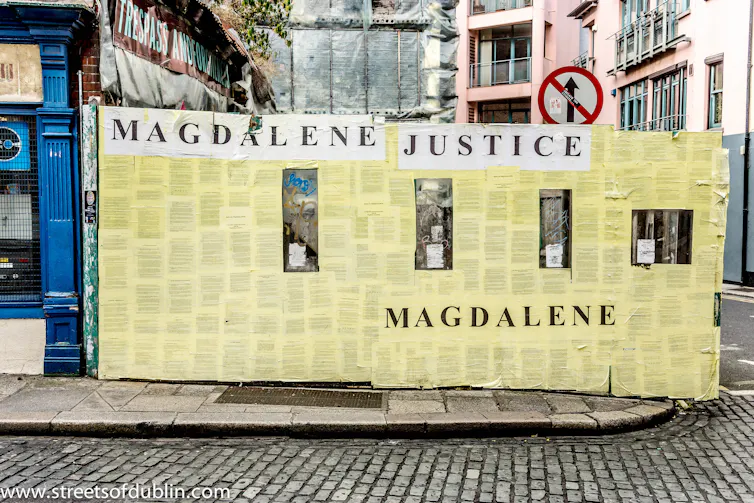
In Northern Ireland, by contrast, a 2021 report into mother and baby homes and Magdalene laundries led to the government initiating a Truth and Recovery Programme. The independent panel is due to publish its detailed report on July 9.
England is the last nation on these islands to officially acknowledge this shameful history. Doing so is a crucial first step towards justice for the survivors. Starmer is right to point out, however, that an apology in and of itself is not enough. The government must heed survivors’ accounts and provide full redress, failing which these will be empty words of little value.
Starmer has duly promised to fund a national online resource providing people with a single-access point, and the support necessary, to locate records pertaining to the adoptions they were involved in. In order to ensure, as he put it, that lessons from the past are learned and that nothing like this should ever happen in England again, he said the government will be commissioning a testimonials project, to capture the experiences of those whose lives were upended by these practices. Addressing, finally, the campaigners who persisted in raising this issue for decades, he said: “It should never have happened, and you should not have had to fight so hard for this day to come.”

Lindsey Earner-Byrne received funding from the AHRC to explore the history of single-parent families in 2024 – Grant No 2562291.
Janet Greenlees received funding from the AHRC to explore the history of single-parent families in 2024 – Grant No. 2562291.