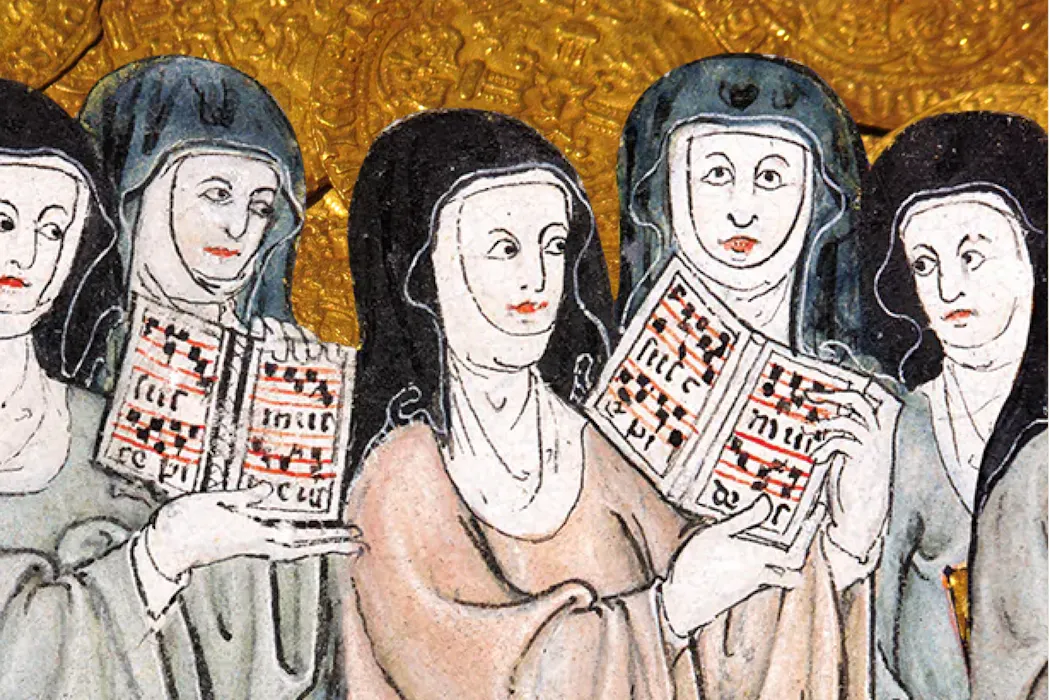
Retirement planning might seem like a thoroughly modern concern, with pensions, investments and annuities forming part of today’s financial toolkit. But these financial tools are much older than they appear. In the later Middle Ages, people were already exchanging lump sums for steady income streams – and, in cities like Vienna, these arrangements underpinned entire urban economies.
Less expected, perhaps, is who helped make this system work. Alongside merchants and elites, communities of nuns quietly emerged as some of the city’s most reliable financial operators.
Annuities existed in several forms, each suited to different needs. At their core, these contracts involved one party providing a lump sum in exchange for a regular payment, usually secured on property or urban revenues. The most common type in medieval Vienna – my area of research – was the perpetual annuity, which generated a fixed annual return without a set end date and could be transferred or sold.

Southampton City Art Gallery
Alongside these stood life annuities, which paid people an income for their lifetime. This arrangement provided security in old age and helped with managing inheritance. There were also public annuities issued by civic authorities, through which the city itself raised funds by promising regular payments backed by its revenues.
These different forms of annuity supported a wide range of financial strategies. Households used them to access liquidity, investors secured predictable income streams and institutions managed long-term assets.
In cities such as Vienna, this system formed the backbone of urban finance and enabled sustained economic activity in the absence of formal banking institutions.
Women, credit and the records of a city
My research in Vienna’s city records offers an unusually detailed view of this system. A data-set of more than 2,000 annuity contracts recorded in the Grundbücher, the city’s property registers, between about 1360 and 1450 makes it possible to trace who participated in these markets and how their activity evolved over time.
Women are especially visible in these records, appearing frequently as both borrowers and lenders. Wives participated in household finance alongside their husbands, widows managed and reinvested their assets and some women acted as independent economic agents in their own right. Far from being marginal, women were embedded in the everyday functioning of late medieval credit markets.
Over the course of the 15th century, however, these patterns began to change. Individual women appear less frequently in annuity transactions. In their place, a different kind of female economic actor becomes increasingly visible: the convent.

National Museums Liverpool

Life cycle stages shaped how women engaged with credit within Vienna’s legal framework. Urban regulations defined when women could control property, including widowhood, entry into a convent and recognised economic maturity later in life.
Within these conditions, women appear in the annuity market across different stages, sometimes acting independently and sometimes with spouses or kin. At the same time, wider institutional changes shaped how credit moved through the city. Women remained an integral part of this system, even as the forms of their participation evolved.
One of the most striking developments during this period is the growing importance of female religious houses as lenders. As individual women appear less in annuity transactions, convents emerge as increasingly active providers of credit.
This shift becomes particularly visible after 1420, when Vienna’s Jewish community – long an important source of credit – was expelled. As established channels of lending contracted, new opportunities opened up. Convents stepped into this space, expanding their lending activity and becoming key providers of urban credit.
Convents as lenders
Convents gathered resources through dowries, donations and rents, building up substantial pools of capital behind cloistered walls. They then deployed this wealth through annuity contracts, often over long periods, carefully spreading risk by lending to a wide range of borrowers.
Convent administrators tracked payments, negotiated contracts and cultivated reputations for reliability. In a world where trust underpinned financial exchange, nuns became known as dependable creditors.
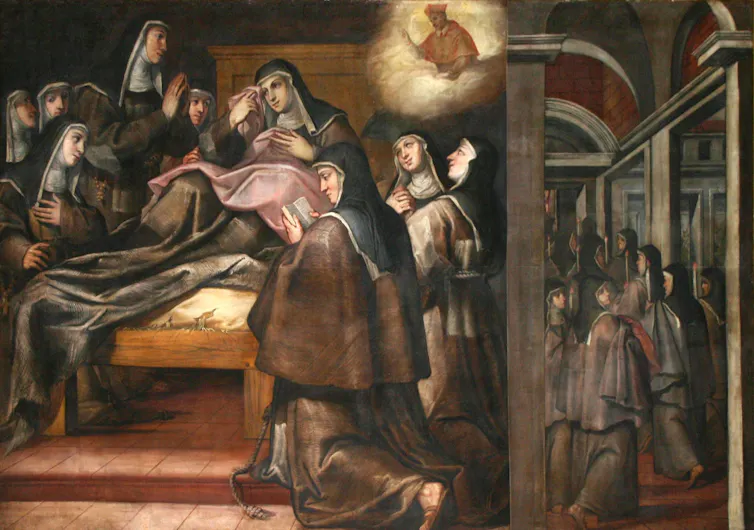
Milan Cathedral
_(1610)_-_Foto_Giovanni_Dall%27Orto,_6-Dec-2007.jpg)
Their borrowers varied too. Viennese private annuity records show households, artisans, elites and institutions all turning to convents for credit. These loans supported property transactions, the management of existing debts, household needs and investment. Convent lending formed part of the everyday functioning of Vienna’s economy.
Understanding these records reshapes how women’s economic history can be understood. Though individually women were less represented in the financial systems, there was a shift toward collective and institutional forms of financial participation. Women continued to shape economic life, often through structures that organised and amplified their resources.
At a time when discussions about financial inclusion and stability remain central, there are lessons to be learned from Vienna. Trust, adaptability and a diversity of participants are integral to any healthy financial system. When established sources of credit change, new ones can step forward to sustain the system. In this case, female religious communities played a central role in supporting economic resilience.

Anna Molnár greatly acknowledges the generous funding she receives from The Leverhulme Trust to conduct her research.