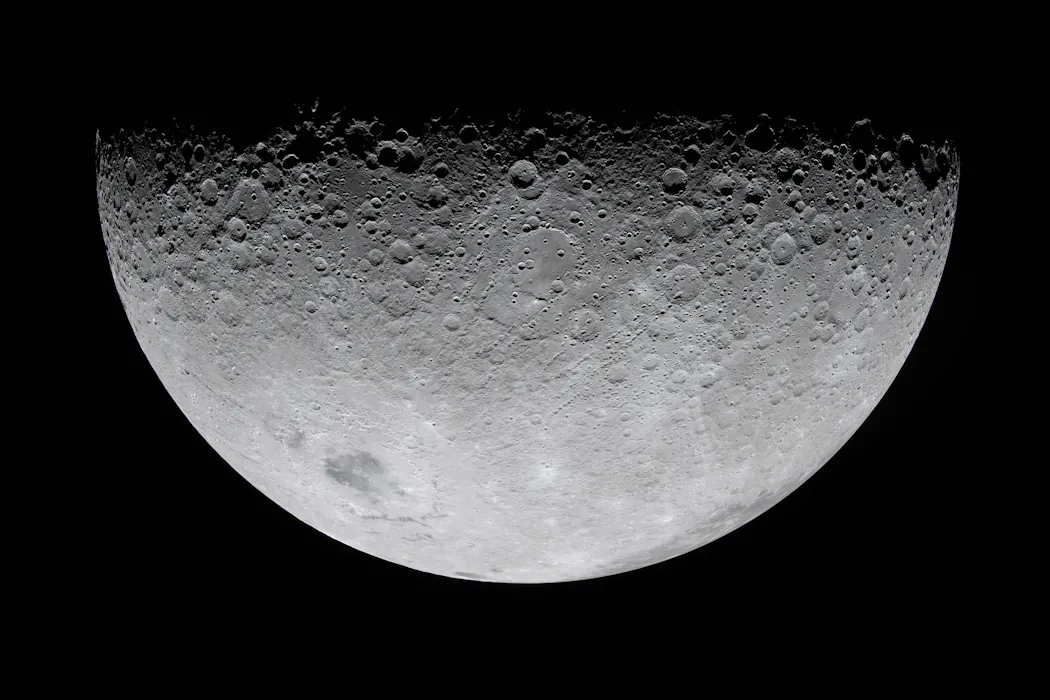
On April 10, Artemis II – humanity’s first mission to the Moon in more than half a century – will draw to a close when the Orion capsule carrying four crew members detaches from its service module.
The capsule will then make a fiery plunge towards Earth, travelling at a speed of 25,000 miles per hour. As it plummets through the atmosphere, Orion’s heat shield will encounter temperatures of more than 1,600°C as the spacecraft decelerates rapidly.
A series of 11 parachutes will deploy in sequence to bring Orion to a relatively sedate 25mph splashdown off the coast of San Diego in California. Splashdown will round out a remarkable flight which took the astronauts Reid Wiseman, Victor Glover, Christina Koch and Jeremy Hansen on a looping lunar flyby.

Nasa
Reaching a distance of 252,756 miles from Earth, they travelled further from our planet than humans have ever been – exceeding a record set by the crew of Apollo 13 in 1970.
The four-day journey out to the Moon was remarkably smooth, barring a few minor hiccups. The capsule’s 3D-printed titanium toilet malfunctioned early in the flight and had to be fixed by mission specialist Koch who, during a group interview, declared: “I’m the space plumber!” A communications dropout about 50 minutes into the flight was quickly resolved.
The Moon is tidally locked to Earth, meaning it completes one rotation on its axis in the same time it takes to orbit the Earth (28 days). This means we always see the same face of the Moon.

Nasa
The lunar far side therefore remains permanently out of view from Earth, and has often been referred to as the dark side of the Moon. In fact, it receives just as much sunlight as the near-side face.
The two faces are, however, remarkably different. On the near side, the darker regions (the lunar maria) that we can see from Earth are vast smooth plains of solidified, iron-rich lava.
This lava has been gradually powdered by meteoroid impacts over the aeons. The lighter regions we see are comprised of mountains and densely packed impact craters.

Nasa / Gareth Dorrian
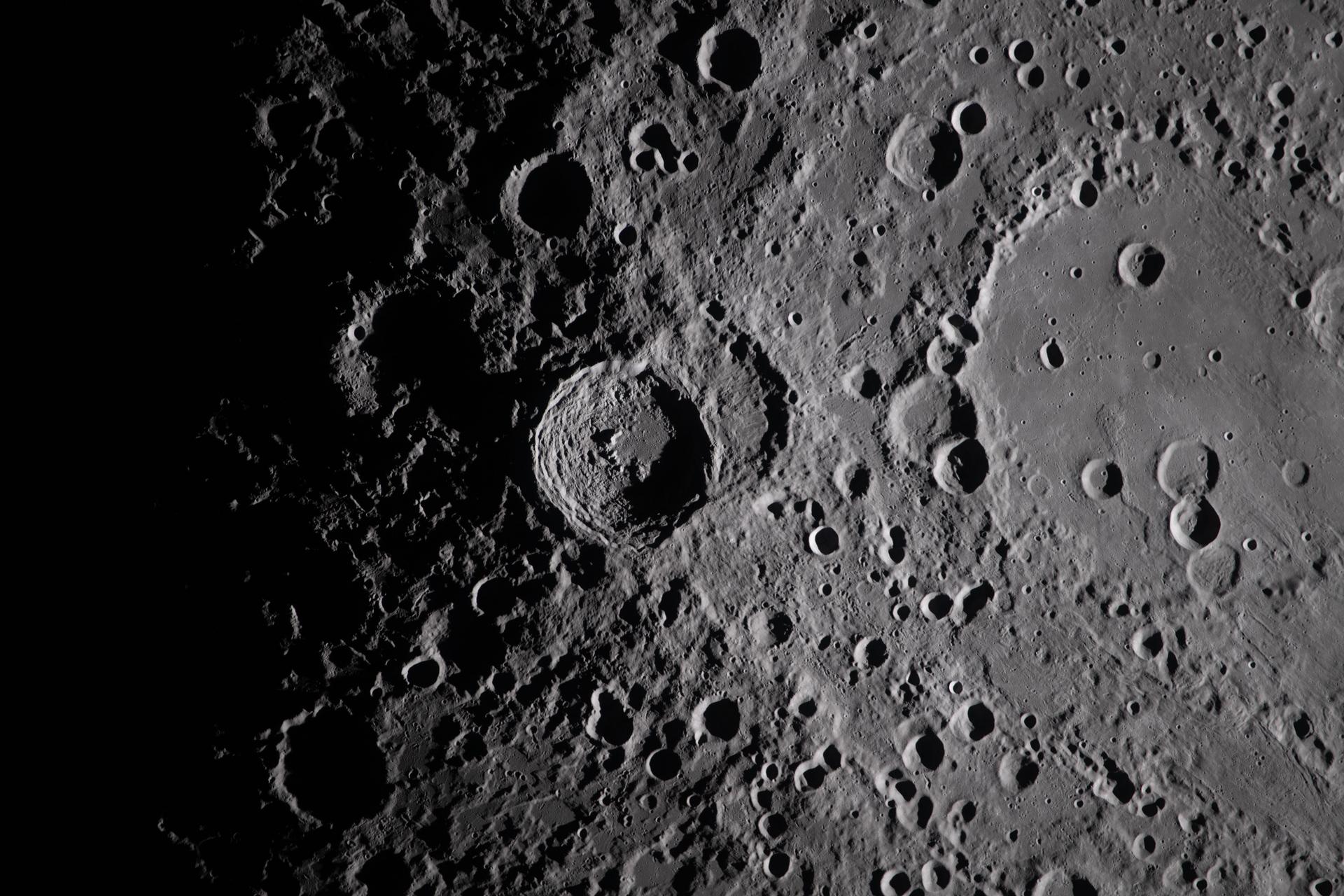
Compared with the face we see from Earth, the lunar far side is extraordinarily rugged. It is peppered with impact craters and has very few smooth lunar maria. Why this disparity exists is still debated.
The Artemis II astronauts were struck by this difference during their flyby, remarking on the shadows cast by lunar topography near the far-side terminator (the boundary between day and night).
Orion’s loop around the Moon brought the crew to a distance of 4,067 miles from the lunar surface. From this remarkable vantage point, high over the lunar far side, the astronauts were treated to a grand view of the full lunar disk.

Nasa
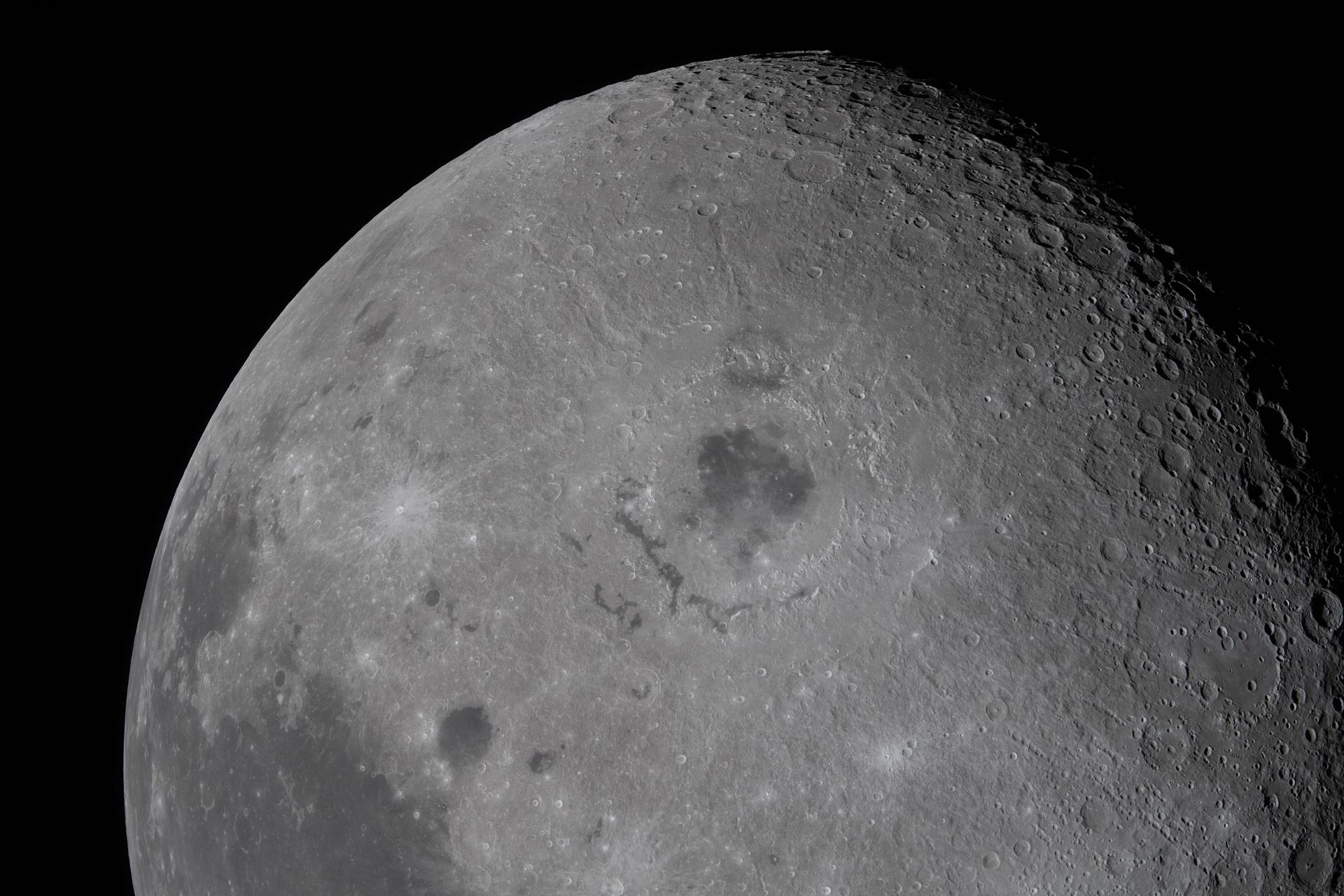
They captured some beautiful imagery of our nearest, yet still-enigmatic celestial neighbour.
One of the few distinct far-side maria is Mare Orientale, a circular bullseye-like impact basin which was subsequently flooded with lava.
Orientale was formed by a powerful impact some 3.8 billion years ago, towards the end of the Late Heavy Bombardment – a surge of enormous meteorite impacts which struck the planets of the inner Solar System. Mare Orientale measures 180 miles across, roughly the distance between London and Leeds in the UK.
One advantage of sending astronauts to directly view terrain like this is the human eye. Despite the advances of modern imaging technology, our eyes are still one of the best instruments for perceiving colour.
While high over the lunar far side, the astronauts reported seeing not just shades of grey on the lunar surface far below them but also subtle tones of browns and greens, hinting at the complex mineral make-up of this ancient terrain.
During their flyby, the crew also observed two unnamed craters which they named Integrity, after their spacecraft, and Carroll, after Wiseman’s wife who died of cancer in 2020 aged 46. Canadian astronaut Hansen’s voice cracked with emotion as he announced the name during Nasa’s live mission coverage.
As the Orion spacecraft passed behind the Moon (from our perspective), the astronauts were treated to a stunning view of Earthset where, from their perspective, the Earth dipped below the lunar horizon.
During this time, radio signals between Earth and the spacecraft were blocked, causing a 47-minute communication blackout. But the astronauts remained busy with tasks, including photographing the part of the lunar far side that was in darkness, to see if any flashes from meteorite impacts could be seen.
Wiseman, the mission’s commander, explained: “As soon as we went out of [contact] with planet Earth, we did have maple cookies … and then right back into the science. We had to take a moment to honour that time going behind the Moon and out of touch with Earth. That was a very surreal moment.”
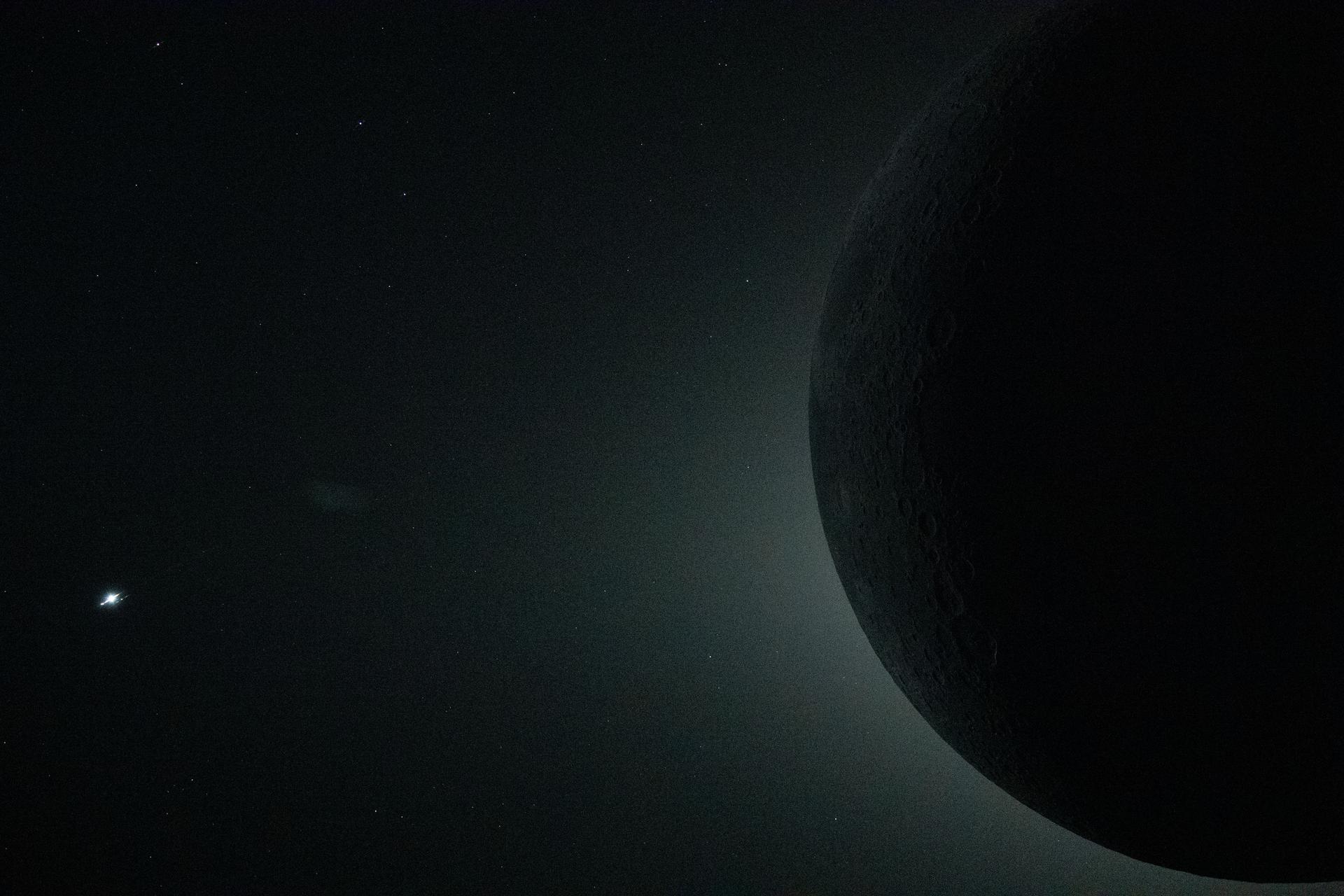
Shortly after regaining contact with Earth, the astronauts were treated to yet another stunning perspective: a total solar eclipse, but seen from space near the Moon.
From Earth, a total solar eclipse at a given location typically lasts a few minutes and, by coincidence, the visible size of the lunar disk is approximately the same size as the visible size of the solar disk.

Nasa
However, from near the Moon, the lunar disk appears much larger and the eclipse lasted nearly an hour. By blocking the powerful light from the Sun, it revealed part of the Sun’s extended atmosphere called the corona (Latin for crown).
This diffuse atmosphere is more than a million times fainter than direct sunlight. When the Moon blocked this out, the astronauts could clearly see the corona extending out far into the solar system. It is actually a combination of diffuse gas flowing out into space and dust particles which scatter sunlight (called the F-corona).

Nasa
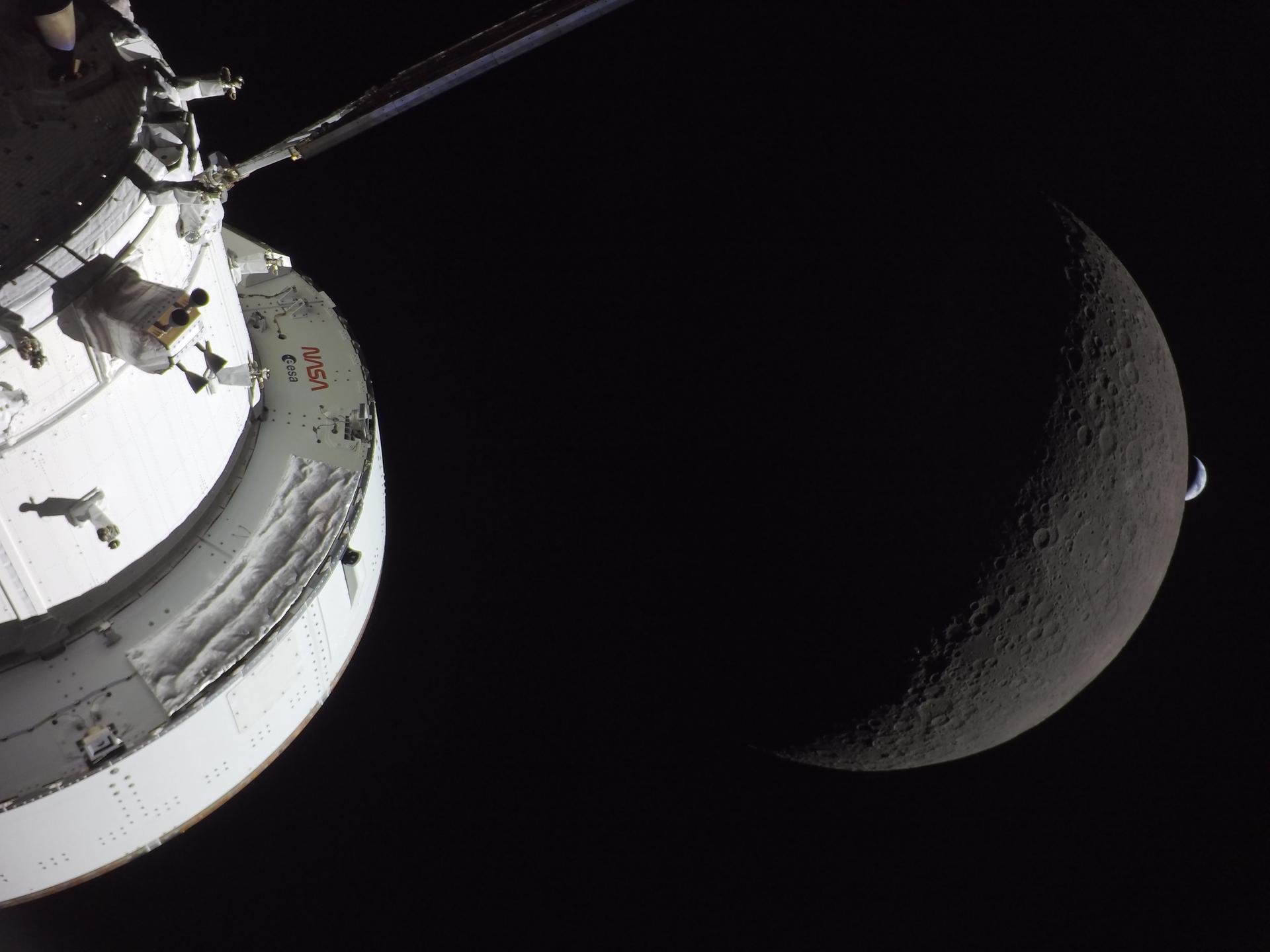
The F-corona is more extensive in the plane (an imaginary flat surface in space) in which the planets all orbit the Sun. This effect can be seen in the image below, where the corona extends outwards towards the planet Venus (bottom left).

Nasa
Technically, Artemis II is an engineering mission designed to test the performance of the Orion spacecraft in supporting human crews in deep space for extended periods.
However, when one looks at the images it has returned and the stories of the astronauts, it is hard not to think of this as a mission of exploration in its purest sense. The crew were heading out into the unknown, just to see what’s out there.

Gareth Dorrian does not work for, consult, own shares in or receive funding from any company or organisation that would benefit from this article, and has disclosed no relevant affiliations beyond their academic appointment.