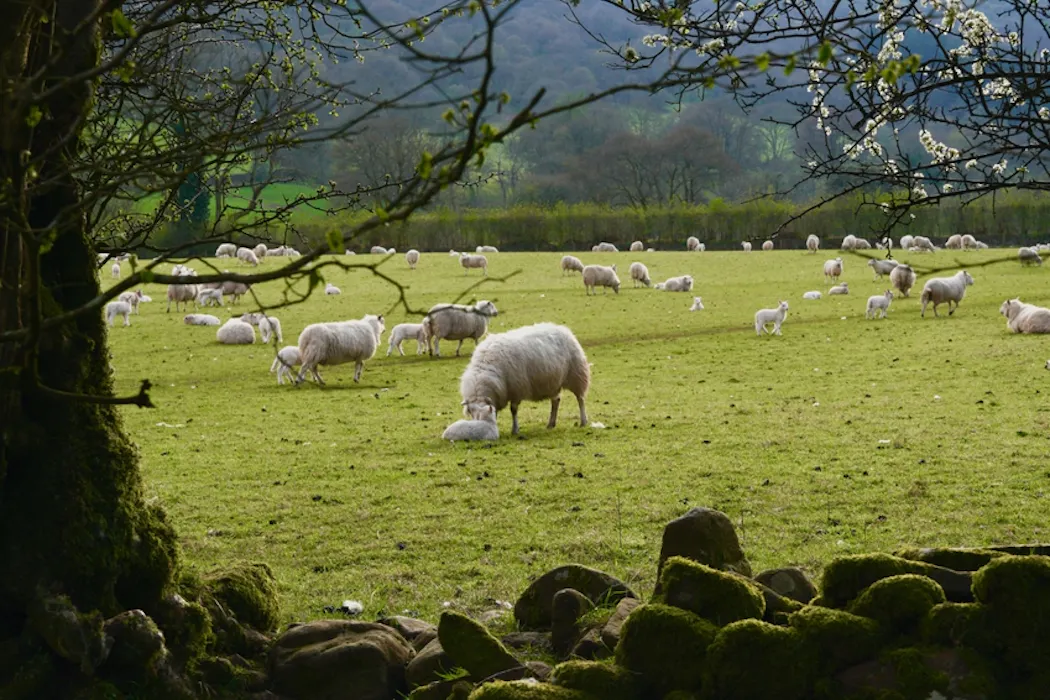
In the last of our series on environmental issues and the Wales election campaign, we look particularly at countryside policies of two parties that are new contenders for seats in the Senedd.
The elections to Wales’s parliament, the Senedd, on May 7 are set to be the most unpredictable since the creation of the devolved government in 1999. With current polling indicating close contests in many constituencies, rural voters could make a critical difference to the final result.
Issues such as farming support, windfarms, pylons and changes to rural healthcare services are contentious, but they form part of a larger question about the future of rural Wales. Interestingly, the two parties projected to win seats in the Senedd through election for the first time – Reform UK and the Green party (Reform UK has two seats in the outgoing Senedd through defections) – represent contrasting visions of the Welsh countryside.
Reform’s rural vision
Reform UK has directly targeted discontented rural voters. With a cover image showing daffodil-covered green hills, Reform’s manifesto says it will “back Welsh farmers”. It promises “agriculture will be treated as a strategic national asset”.
Specific policies include: reforming the new post-Brexit Sustainable Farming Scheme to emphasise food production, funding for young farmers’ clubs, scrapping net zero targets and banning new onshore wind farms and solar arrays, reducing environmental regulations and protecting lawful game bird release. It also plans to “streamline planning regulations” and cut back on “red tape”.
Read more:
Why windfarms and electricity pylons have become a major issue in the Welsh election
Reform is competing with the Conservatives for the voters that this version of rural Wales appeals to. Although the Conservative manifesto is less dramatic in tone, especially on net zero, it also plans to scrap the Sustainable Farming Scheme and introduce a moratorium on industrial scale wind and solar power stations.
A Green vision
The strongest prospects for the Green party are in urban constituencies. However, their platform contains policies that would have significant implications for rural Wales. They include a Land Reform Act, making it easier for communities to buy land, a “Welsh Right to Roam” offering “responsible access to the countryside”, a national rewilding strategy and commitments to a Sustainable Farming Scheme that rewards “nature-friendly farming” and renewable energy targets.
These represent a very different vision for the Welsh countryside to Reform. But they also reflect an alternative, almost counter culture, strand of Welsh rural society that has welcomed people who moved to rural areas in search of a new way of life since the 1960s and pioneered organic farming and low impact development.
There are currently Green councillors in rural Monmouthshire and Powys. Some projections suggest the party could win two or three Senedd seats in significantly rural constituencies.
If the Greens achieve more than 10% of the vote nationally, they are likely to do so by taking votes from Plaid Cymru, including in rural areas.
Plaid Cymru needs both rural and urban seats to become the biggest party. Its manifesto contains a significant section on rural policies, but with less prominence than Reform UK’s. Plaid’s rural policies broadly share the pro-environmental approach of the Greens, but the influence of conservative rural voters in its heartlands is evident in careful positioning on farming, windfarms and pylons, as well as the absence of mentions of rewilding.
On rural and environmental issues the Greens are more aligned with Labour, while Plaid Cymru are closer to the Liberal Democrats.
Politics in rural Wales
Wales is sometimes described as predominantly rural, but while 80% of the land is countryside, most people live in the towns and cities. Nevertheless, around a third of Wales’s population lives close to the countryside, in largely rural local authorities.
Over the last 25 years rural Wales has experienced substantial social and economic restructuring, including declining work in farming and manufacturing, along with many young people leaving to find jobs. These areas face challenges from low wages, sparse infrastructure, precarious public services and competing visions for land use.
Three issues in particular have attracted attention. First, plans for the Sustainable Farming Scheme (the Welsh government plans for agriculture subsidies to replace EU funding) provoked protests by Welsh farmers in 2024, especially over proposed requirements for 10% of farmland to be planted with trees. The later was subsequently withdrawn.
Second, there’s been opposition to new windfarm developments and pylon lines. Rewilding projects have also been controversial. Third, downgrading of services at hospitals serving rural areas and closure of village schools, have sparked local campaigns.
Public anger over these and other issues has often been directed at Welsh Labour, the governing party in Wales since 1999, with other parties trying to cast it as urban focused.
Labour did win rural constituencies in the 2024 UK general election, and current First Minister Eluned Morgan has a long-standing interest in rural affairs, outlining a plan for rural Wales in 2017. The Labour manifesto promises to “increase rural Wales’ skills and productivity” and to promote “food, farming and forestry”.
The traditional stronghold of nationalist Plaid Cymru is in the rural north and west Wales. While the Conservatives’ strongest support is in rural districts close to the English border and in parts of south Wales. The most enduring areas of support for the Welsh Liberal Democrats are in rural mid Wales.
Results to watch for
A few key results will provide an indication of the political temperature in rural Wales:
-
Whether Plaid Cymru or Reform UK get most votes in Brycheiniog Tawe Nedd, Gwynedd Maldwyn and Sir Gaerfyrddin
-
Whether the Greens win a seat in Ceredigion Penfro, Gwynedd Maldwyn, or Sir Fynwy Torfaen
-
Whether the Conservatives get seats in Bangor Conwy Môn, Brycheiniog Tawe Nedd and Ceredigion Penfro, and the Liberal Democrats retain their seat in Brychceiniog Tawe
-
Whether Labour’s Eluned Morgan can hold on to her seat in Ceredigion Penfro.
If, as seems likely, no party has a majority, rural issues will play an important role in coalition discussions. A shared rural vision could assist agreement between Reform UK and the Conservatives; while negotiations between Plaid Cymru, Labour or the Greens will need to resolve differences in rural and environmental policies. This may have profound consequences for the future of rural Wales.

Michael Woods receives funding from UKRI. He is a member of the Liberal Democrats.