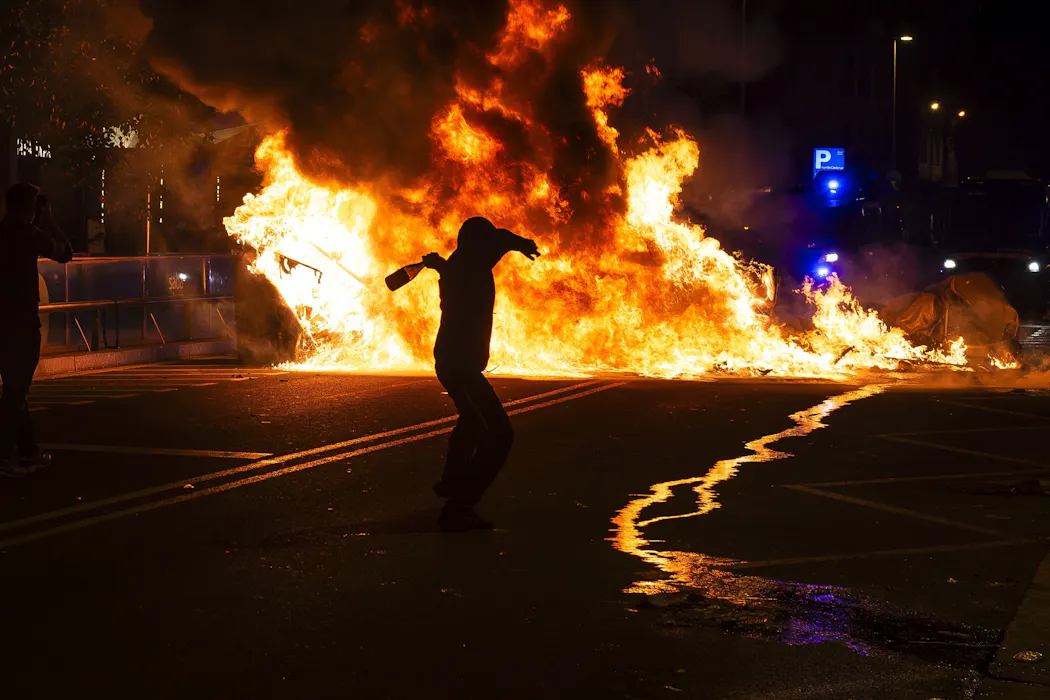
Spain’s November 11 general strike, called in response to a housing crisis, stagnant wages and rising living costs, is part of a much wider European story. Student-led protests in countries across the continent have spread from schools and universities into broad alliances with trade unions and housing campaigners.
France has seen large-scale unrest, initially linked to conditions in schools. German pupils have mobilised against conscription, thousands have marched in Greece over public education failures, and Serbia’s student protest movement has reshaped its national politics.
The obvious historical parallel is 1968. Then, as now, European student protests spread beyond campuses, crossed borders and drew workers into mass mobilisation. Politicians warned of social breakdown.
This comparison is not wrong. But focusing only on the similarities risks missing an important distinction between the two moments: that the grievances of the protesters are fundamentally different.
The 1968 generation was the first to pass through mass higher education in a period of full employment. It rebelled against paternalism – rigid universities, deference and a stifling culture. One prominent slogan during these protests, “Il est interdit d’interdire!” (It is forbidden to forbid!), was a demand for more freedom from people comfortable enough to want it.
The 2026 grievances are almost the reverse. French pupils describe classrooms with rats, extreme temperatures and no running water, and up to 40,000 German pupils walked out recently over fears of conscription. These are demands that the state deliver on its promises, not a call to reinvent life.
The 1968 movements also drew on a shared vocabulary: Marxist critiques of capitalism, admiration for Mao Zedong’s China among some radicals, the philosopher Herbert Marcuse’s argument that consumer society dulled dissent, and, above all, opposition to the Vietnam war.
In 2026, there is no such common framework. The protests largely all have a different trigger, from school conditions in France to conscription in Germany and housing in Spain, and each is quickly read through its own culture war.
The politics of abundance encouraged campaigns for more freedom, while the politics of scarcity encourages campaigns for provision.
The question of political power
The conventional lesson of 1968 is that protest movements can transform culture while failing to capture power. In France, President Charles de Gaulle’s party won a decisive electoral victory that same year after appealing to public fears about the disorder.
Serbia was a similar story. In 1968, Belgrade students occupied university buildings and challenged inequality in socialist Yugoslavia. Josip Broz Tito, Yugoslavia’s leader at the time, publicly acknowledged many of their criticisms and said the students were “right”. Yet recognition did not become power, and the movement’s leading figures were later marginalised.
Serbia’s recent protest movement suggests another trajectory. It emerged after the 2024 collapse of a railway station canopy in the city of Novi Sad, which became a symbol of wider corruption and accountability concerns. Aleksandar Vučić, the former Serbian president who was recently removed from power, dismissed the protesters as part of a western-backed “colour revolution”.
Yet the students moved beyond protest and built an electoral movement that turned public dissatisfaction into an election victory. The students of 1968 won recognition but not power; those of 2026 have come much closer to achieving both.
While Serbia’s students won the election, whether they can govern remains open. The movement has no clear leader, its candidates lack political experience and it faces public institutions staffed with civil servants loyal to the outgoing regime.
However, regardless of what lies ahead for Serbia, research suggests movements organised around concrete, material grievances may find it easier to form electoral coalitions than those built around broader ideological visions.
There is another lesson from 1968. Barricades look romantic in hindsight, but at the time they were portrayed as social breakdown. The same dynamic is visible today.
On October 17, more than half a million people marched peacefully in towns and cities across France, but coverage was quickly dominated by the looting that followed. Politicians have read the violence through their own agendas.
In France, Marine Le Pen’s far-right National Rally has blamed the far left and immigrants. While in Spain, ahead of a snap election on November 29, Madrid’s regional president, Isabel Díaz Ayuso, has accused a “great ultra-left” of harassing governments and answering its fear of the polls by burning the streets.
Even the vocabulary is contested. Sociologist Paolo Stuppia has argued that casseurs, the French term (literally “breakers”) for those who smash and loot during demonstrations, is a historically vague label tied to the stigma attached to young people from working-class neighbourhoods.
The political consequences of the violence remain uncertain. Disorder can strengthen movements seeking change, but it can also strengthen those presenting themselves as defenders of order.
What happens next?
Spain’s general strike, the international youth strike planned for November 20 and the political responses that follow will test whether the current protest wave can sustain itself.
The real question is not whether 2026 is another 1968. It is whether movements built around scarcity and the demand for basic provision can achieve what many of 1968’s could not: the conversion of social protest into lasting political power.
In Serbia, students in 2026 have already unseated the ruling party at the ballot box. Spain’s test comes next: its general strike falls just weeks before the snap election. Many will be thinking back to 2011, when the conservative People’s Party won an absolute majority shortly after nationwide demonstrations, showed how easily protest can be answered with a vote for order.
The question for Spain, and for the rest of Europe, is whether it follows the path of Belgrade or the path of Paris.

Amir Keshtiban does not work for, consult, own shares in or receive funding from any company or organisation that would benefit from this article, and has disclosed no relevant affiliations beyond their academic appointment.