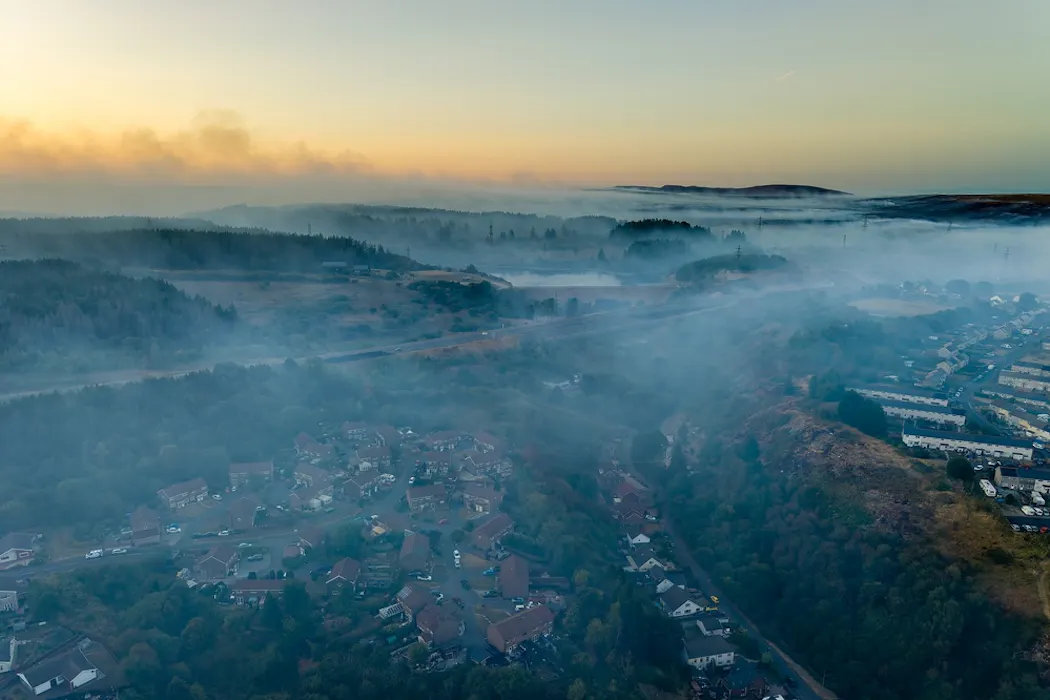
This summer broke records around the UK for maximum temperatures and dry weather.
According to the UK’s Met Office, while it was rare to hit 35°C in the 20th century, that temperature has been surpassed in six out of the past ten years. And it’s only expected to get higher.
Rising temperatures not only contribute to illness and deaths, but also to wildfires, water shortages and the collapse of infrastructure and services.
So has this changed the public’s attitudes at all? According to recent polling data, around 74% of people in the UK say they’ve directly experienced extreme heat, up from 46% before the summer of 2026. And 62% now say extreme heat is the most pressing climate impact, up from 36% in October 2024. Concern about wildfires has jumped from 13% in October 2024, to 47% in 2026.
High temperatures made more 50% of British people more fearful about the future, including how hot summers will affect children. One poll found that 65% of the British public were now concerned about climate change, and only 16% unworried. Among Reform supporters this was 46% and among Green Party supporters 87%.
Polling shows that climate change and the environment shot up people’s lists of concerns in 2026, with 51% of people saying the recent heatwaves made them feel it’s more important that the UK government and businesses tackle climate change. The issue saw less of a jump in concern levels in Scotland, where temperatures were generally lower.
Indeed, public support for specific climate and environmental policies increased slightly from April to August 2026. For example, net support for a frequent flyer levy rose from 18% to 20% and for low-traffic neighbourhoods from 14% to 18%.
This is a noticeable shift even from a few years ago – when scientists at the Centre for Climate Change and Social Transformations research centre asked people about their experiences of the 2022 heatwave, and many still saw heat as desirable. In the middle of the 2026 summer, British people said they associated the weather with words including “exhausted”, “uncomfortable” and “unbearable”.
However, wider research shows that experiencing extreme weather such as flooding, hot summers and hurricanes has a negligible effect on climate change belief.
Partly, this is due to what psychologists call “motivated reasoning” – people interpret events according to what they want to be true.
For example, reactions to hot weather can depend on political affiliation, with progressive/left-leaning groups being more likely to report personal experience of extreme heat and increase their support for related policy after a heatwave, compared with those supporting right-wing parties.
What changes what people do?
So experiencing extreme weather only boosts support for climate-related policy, if people link it to climate change, or it fits with their world view. This means there is no sign of the 27% of voters opposed to net zero changing their position on the basis of experiencing a hot summer.
Climate worry doesn’t noticeably change people’s behaviour like saving water or reducing car use. Choices are shaped far more by demographic factors and income. As an example, personal income explains about 18% of variance about flying somewhere, while concern about climate change explains less than 1%.
However, the issues caused by climate change (water shortages, high heat) could keep climate change nearer the top of the political agenda.
Communicating differently could help increase public backing for climate policies, by better connecting heatwaves with climate impact. Doing this would appear to boost policy support.
Some people see hot summers as an opportunity for “fun in the sun”, despite the serious risks it poses. This positive imagery may make people less worried about heatwaves and climate change.
But extreme weather can provide moments for climate engagement, as well as an opportunity to change behaviour. Interventions at critical times are more effective at changing behaviour because when habits are disrupted, people are more open to considering alternatives. For example, when there’s a hosepipe ban, policymakers can use this as an opportunity to shift people towards saving more water.
But, if people are going to change what they do in the long-term, it’s likely to be by making climate-friendly choices cheap, convenient and safe for more people.

Lorraine Whitmarsh receives funding from the Economic & Social Research Council (ESRC) and QCF.
Bella Zanin receives funding from the Economic & Social Research Council (ESRC) and QCF.