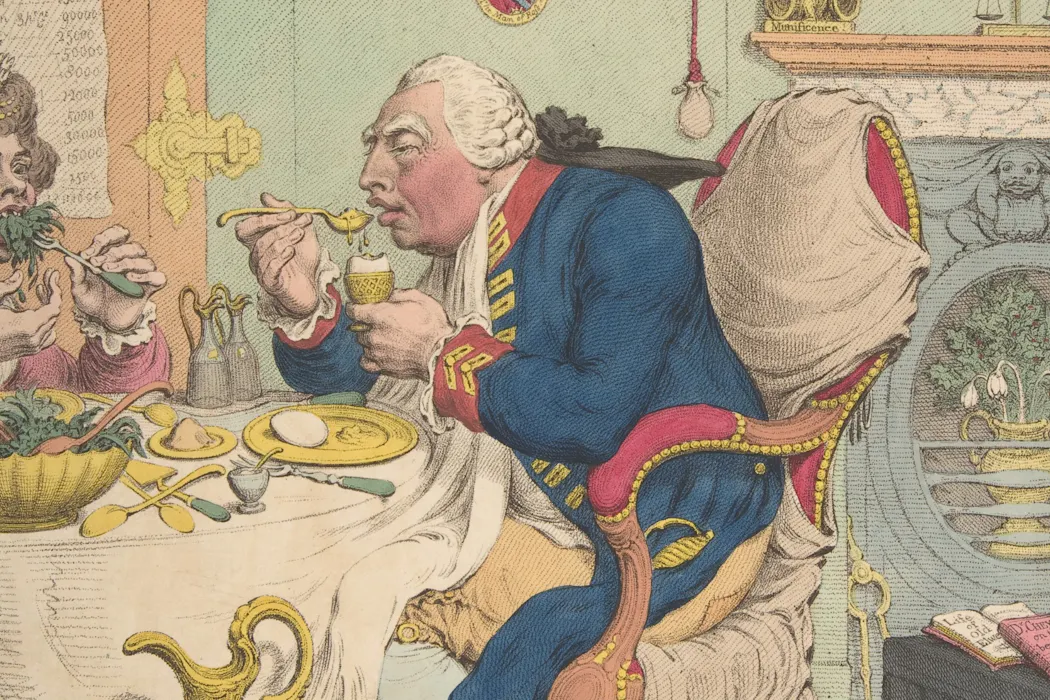
The stereotype of bland British food is notorious, and people mock the horrors of jellied eels and overcooked vegetables. Even roast beef and pudding are seen as uninspired compared to the cuisines of other nations. But British food is and has historically been complex, multicultural, and flavourful.
It was wartime rationing that damaged Britain’s culinary reputation. With our co-authors, digital humanities scholar Adam Crymble and historian Sarah Fox, we looked at the age of George III (1760 to 1820) in our book, The King’s Dinner.
We found surprisingly diverse flavours, as well as evidence of Britain’s growing global power as it took on cooks and ingredients from across the globe and appropriated their tastes into the emerging national cuisine.
1. Cornucopia of vegetables
Wikimedia

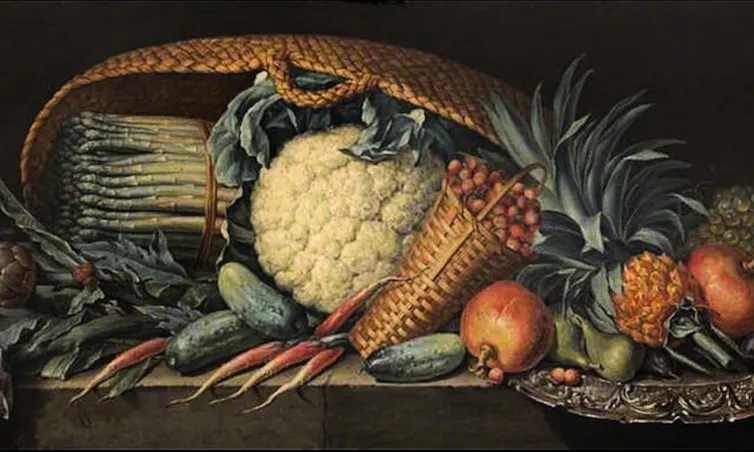
Everyone thinks of roast beef when they think of British food, but there were plenty of vegetables available to grow or buy, and the King and his family ate lots of them. Monthly account books for King George III’s household at Kew (1794-1799) show 32 types of vegetables and fruits that were regularly purchased.
These items ranged from relatively recent introductions such as broccoli (originally from Italy), potatoes from America and cucumbers from Asia, to long-established ones such as samphire, cabbage and artichokes.
2.European-inflected
George was the first of the Hanover monarchs to be born in England – previously they had all been born in Germany. His wife Charlotte, however, was from Mecklenburg-Strelitz. Their meals at Kew were comparatively heavy on fish and vegetables, similar to the foods eaten in Germany.
Eighteenth-century Britain was home to many migrants who had fled religious persecution or the French revolution. In the era of the Napoleonic Wars (1803-1815), some people thought French food was unpatriotic, but fashionable Brits loved French cuisine. Lots of other European imports were sold in London shops, ranging from smoked sausages and reindeer to Parmesan cheese and olives.
In 1815, the Four Nations eating house in London’s Soho served German, Italian, French and English dishes. The appetite for European flavours and ingredients in the British diet reflected the multicultural nation, and its royal family.
3. Indian food
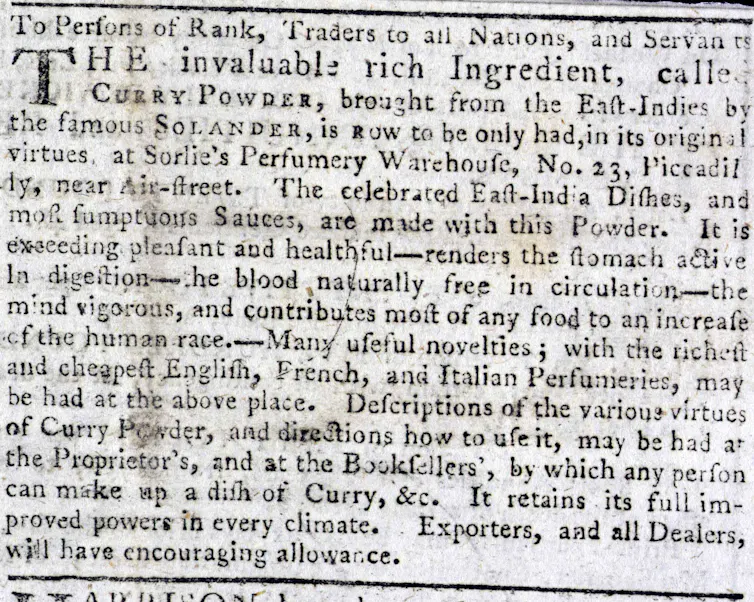
Recipes for Indian-style curries started to appear in the 18th century. Curry was widely and rapidly adopted in British cuisine, in large part because of the significant number of returning employees from the East India Company.
In 1810, Deen Mahomet – an Indian immigrant and, later, shampooing surgeon (an anglicisation of the Hindi word chámpná, which means to knead or vigorously massage) to Prince George in Brighton – set up the Hindostanee Coffee House, which served Indian-style food.
It closed in 1812, partly because of the stiff competition from the nearby Norris Street Café, which had offered curries alongside other fare since 1773.
Wikimedia

The royals don’t seem to have eaten many curries, but – like many people in Britain – they may have enjoyed Indian-style pickles. Cookbook writers such as Eliza Smith included recipes “to mango cucumber”, which was an Indian pickle. Mango, cucumbers or similar foods were hollowed out, stuffed with spices associated with India, including turmeric, ginger, cloves, mace and mustard, then put in vinegar. The Prince Regent was served pullet (a young female chicken) with India pickle on at least one occasion.
By 1800, such goods were readily purchased from specialist dealers’ warehouses. Warehouse no. 42 advertised piccalilli (made from chopped and pickled vegetables and spices) in the East Indian style and Skill’s Warehouse claimed to sell exotic foods such as Indian pickles to several royals.
4. Roast beef, or turtle?
The Met, CC BY-NC
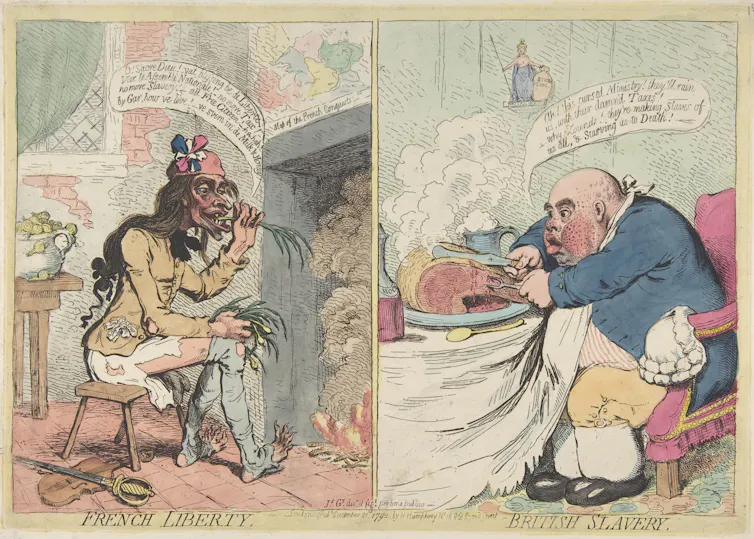
Roast beef’s claim to being the food of Britain was solidified through the many wars between Britain and France during the 18th century. This can be seen in the cartoon French Liberty, English Slavery’ (1792) by English caricaturist James Gillray. The rotund John Bull, a satirical character personifying England, is seen with a hulking steaming plate of delicious beef while his rail-thin French counterpart is dining on raw green onions and live snails. Here British beef and its abundance is used as a symbol of Britain’s wealth.
Despite the growing food shortages by the 1800s, British nostalgia still focused on roast beef as a national symbol. And in the royal household, roast meat was a key part of the diet – even the servants ate it daily.
Turtle, though, was challenging beef’s role as national emblem symbolising Britain’s growing imperial power. It was an expensive luxury – turtles needed to be kept alive on the long sea voyage from the Caribbean so they could be killed before cooking them. But there was definitely an appetite for turtle soup, despite – or perhaps because of – its cost.
The Prince Regent enjoyed turtle soup throughout the summer. It was the second most frequently served soup at his London residence, Carlton House. It was served at the Lord Mayor’s Day in London every year from 1761 to 1825, and was frequently served with some ceremony at banquets and in elite dining clubs until the late 19th century.
Turtle dealers, like Wood’s Soup House in 1802, even advertised events where they would butcher the turtle publicly and ship it in jars across the country. Mock turtle soup, made from a calves’ head, became the budget-friendly and more frequently eaten version.
Umami sauces
French cuisine was made up of unctuous, creamy sauces, where British cuisine was dominated by sharp, intense, tangy flavours that could be added at the table. On its own, roast beef was already umami (savoury, brothy, or meaty), but it was often served with sauces that enhanced its flavour: anchovy and wine sauce, pickles, Asian-inspired condiments made with soy or fish sauce, and meat-rich gravies.
By 1760, store sauces including catsups and pickles were widely available to buy, making it easy to add a dash of umami to cooking. French food was fashionable, but the King and his family seem to have liked a hit of umami: gravies were served over 1,000 times at Kew and Carlton House, and fish-based sauces were a perennial favourite. Taken together these two umami-rich concoctions outnumber the French sauces.
A British palate had emerged. It may have been based on roast meat and vegetables, but it was flexible and open to incorporating tastes from the expanding empire and their European networks.
This article features references to books that have been included for editorial reasons, and may contain links to bookshop.org. If you click on one of the links and go on to buy something, The Conversation UK may earn a commission.

Lisa Smith received funding from the British Academy.
Rachel Rich received funding from the British Academy.