Bitcoin has long been promised to function as money. In practice, it rarely does.
While 99% of transactions are still speculative trading, for as long as bitcoin has been a thing it has been used to skirt governments’ economic controls. Cryptocurrencies are particularly attractive for countries facing sanctions.
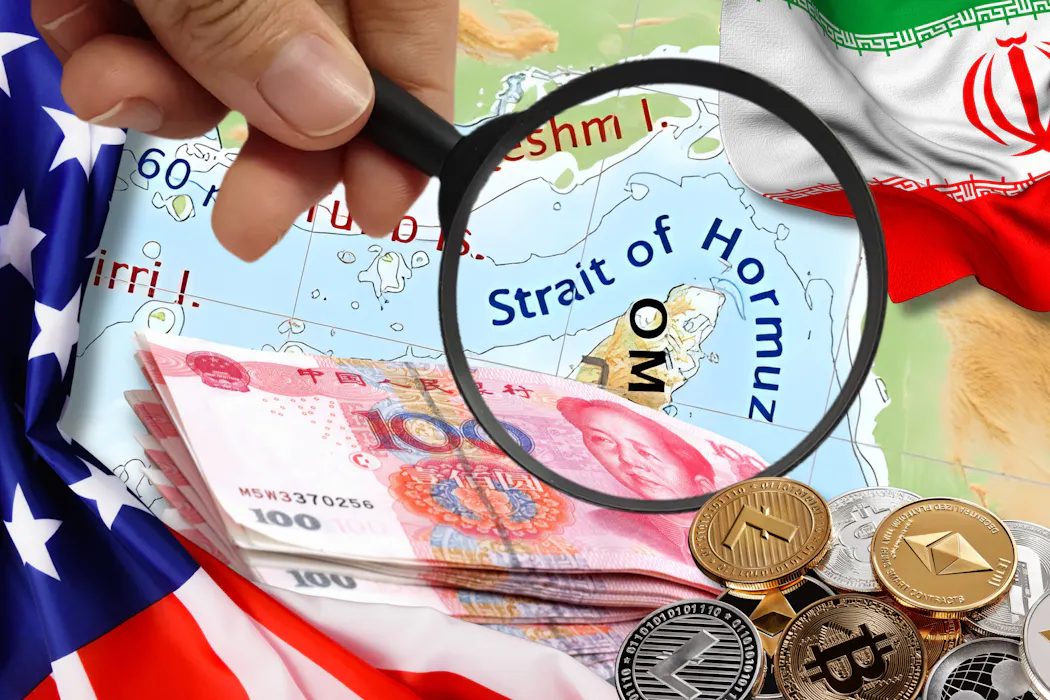
The Iranian government is considering charging oil tankers for safe passage through the Strait of Hormuz in cryptocurrency. The reports have excited the bitcoin community with crypto markets jumping slightly in response. “Once the email arrives and Iran completes its assessment, vessels are given a few seconds to pay in bitcoin, ensuring they can’t be traced or confiscated due to sanctions”, an Iranian government spokesperson told the Financial Times.
$2 million per ship – in crypto
According to blockchain intelligence firm TRM Labs, Iran’s armed forces, the Islamic Revolutionary Guard Corps (IRGC), has accepted payments from ship operators since March, charging up to US$2 million per vessel to transit the strait. Payment can be made not only in bitcoin but also in Chinese yuan or the dollar-pegged “stablecoin” tether.
For shipping companies, the details remain unclear. But many ships are unlikely to set sail without assurances of safe passage from the IRGC.
The US has taken a hard line. President Donald Trump has accused Iran of extortion and stated that the US would hunt down and intercept any ships in international waters that paid the Iranian tolls.
The stalemate is likely to tighten an already narrow choke point. The war has reduced the passage of tankers to a trickle.
Practical problems
Our research has examined how individuals and governments facing sanctions use cryptocurrencies as a way to buy and sell oil, raise hard currency and sidestep economic embargoes. Iran is no stranger to crypto shenanigans. Around 4.5% of all bitcoin mining takes place there, allowing the country to purchase imports and bypass US sanctions.
Yet implementing a bitcoin-based toll system without US approval is not straightforward. Shipping companies will struggle to buy enough cryptocurrency from exchanges without alerting US regulators.
As the US has defined the IRGC a terrorist organisation, any exchanges doing business with Iran risk being added to sanctions lists. Two UK-registered crypto exchanges have found themselves in such a predicament this year.
Even if shipping companies had ready access to millions of dollars-worth of crypto, bitcoin is not truly anonymous. All transactions are logged in a transparent ledger, known as a blockchain, and can be traced with ease in real time.
The transit fee has been reported as the equivalent of US$1 per barrel of oil. US enforcement agencies need only check how much oil a ship is carrying and the time the vessel sailed the strait to guess whether or not a toll was paid.
Who wins from crypto crises
Iran’s plan is seemingly a challenge to the dominance of the US dollar in global oil markets. Accepting payment in yuan, in particular, could subvert the so-called “petrodollar” system. One strategist at Deutsche Bank says the conflict could see “the beginnings of the ‘petroyuan’”.
But China and Iran aren’t the only potential beneficiaries. Some of the biggest commercial proponents of bitcoin are US oil firms, like Exxon and ConocoPhillips. Both have been recognised by the World Bank for their “innovations”: using residual gas from oil wells to power their bitcoin mining machines. Both benefit enormously from a high global oil price and spiking crypto markets. By spurring demand for bitcoin, the crypto industry – centred in the US – will also win big.
In times of war, stocks in weapons companies have always been a safe investment. It looks like cryptocurrencies could be joining them. In a forthcoming book I have written with colleagues, Crypto Crises: how digital currencies accelerate global instability, we explain how cryptocurrencies are reproducing and intensifying geopolitical crises, transforming them into new opportunities for states and corporations to extract profits.
Donald Trump and his family seem to recognise this, and have gone all in on crypto. As well as launching their own cryptocurrencies “meme-coins” and crypto businesses, the president recently bet US$1 billion chasing the bitcoin boom from his own pro-crypto reform policies.
Trump himself initially suggested that the US and Iran might levy the Hormuz toll fees as a “joint venture”, declaring that US involvement would be “a beautiful thing”.
Together, these moves point to a broader shift. Bitcoin remains difficult to use on the high street, while its transparent ledger makes it a terrible choice for criminals. Instead, its real use lies elsewhere.
Crypto use is often a symptom of desperation, not innovation. It is being touted during economic blockades or other moments of geopolitical tension, when conventional financial systems are restricted or have broken down. In these circumstances, it can become a makeshift opportunity for survival, or a tool for making quick profits from instability.

Peter Howson has received funding from the British Academy.