At Lough Neagh in Northern Ireland, sand has been dredged commercially for decades. Large vessels remove sand from the lakebed and transport it to the shore. Because this happens underwater, the scale of the activity is largely invisible. Regulation has focused on where dredging is allowed and how much sand is removed.
Sand is used by the construction industry to make concrete. Demand for sand as a raw material is rising globally. Much of it taken from rivers, coasts and lakes.
But my team’s new research shows that this sand dredging is not just disturbing specific parts of the lakebed. That disruption is much more widespread and may be affecting the entire ecosystem.
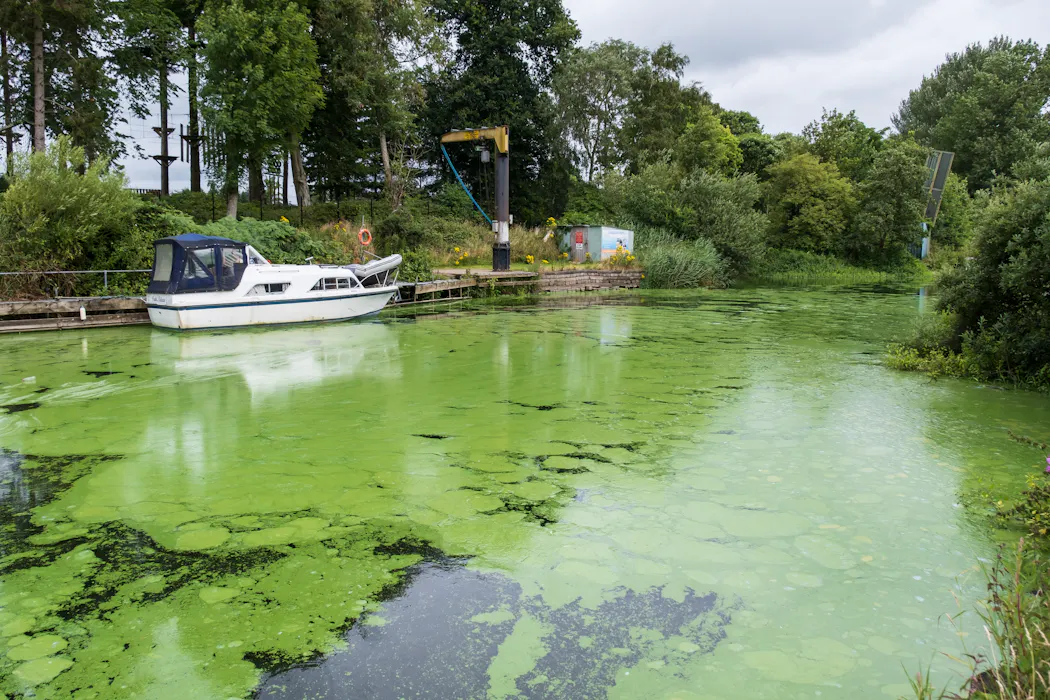
Lough Neagh, the largest lake in the UK, supplies drinking water to 41% of the population of Northern Ireland and supports fisheries, wildlife and local livelihoods. Yet it is now at the centre of an environmental crisis. Toxic blue-green algal blooms caused by an overgrowth of the cyanobacteria Microcystis aeruginosa clog up the entire ecosystem.
Lough Neagh has experienced severe blue-green algal blooms each year since 2023, which can damage both environmental and public health. These blooms are mainly driven by nutrient pollution, warming waters and invasive species. Cumulative release of phosphorus and sustained sediment disturbance by dredging probably frees up nutrients in the system that could contribute to thresholds necessary for algal blooms to occur.
The current management by the Lough Neagh Action Plan focuses on reducing nutrient pollution and doesn’t yet consider sand dredging as a contributing factor.
To understand what is happening below the surface, my team worked with researchers at Newcastle University using sonar mapping to examine parts of the lakebed. Our findings revealed major physical changes. In some areas, dredging had carved deep depressions into the sediment, lowering the lakebed by up to 17 metres. These are not small disturbances. They reshape the lake’s structure.
The lakebed is a living habitat. It supports organisms such as the larvae of Lough Neagh flies, which form the base of the food web as prey for fish and other animals. It is also where commercially important fish like pollan and eel spawn. When this habitat is removed or repeatedly disturbed, ecosystem recovery can be slow or stall.
Our most striking finding was how far disturbance from dredging spreads. Satellite images showed plumes of sediment trailing behind dredging vessels, sometimes stretching more than a mile at the surface.
Such plumes are not created only during dredging itself, but also when boats move between sites, stirring up sediment in this unusually shallow lake with their powerful propellers. So-called “turbidity corridors” at times cover half of the lake’s surface. Sediment was also seen running off shoreline unloading yards, extending up to more than a mile offshore.
Dredging does not stay where it happens. Its footprint moves with the boats and spreads across the lake.
When sediment is stirred up, the effects ripple through the ecosystem. Cloudy water makes it harder for fish and birds to feed. More importantly, sediments store nutrients, especially phosphorus that may be released back into the water if disturbed.
Lough Neagh holds large amounts of what is known as legacy phosphorus. This has built up as a result of natural processes as well as decades of farm runoff, human wastewater treatment overflows and leaky septic tanks among other sources. When sediments are disturbed, stored pollution could potentially be released back into the water. Because the lake is shallow, that release can quickly affect the whole system.
The consequences for wildlife are significant. Disturbing the lakebed may damage fish spawning grounds and disrupt invertebrates that support the food web. Increased cloudiness can reduce feeding success for fish and birds. Powerful boat wakes could erode shorelines and disturb protected nesting birds. There is also concern for the eel fishery that recently collapsed.
While many factors are involved, widespread disturbance adds further pressure on an ecosystem already at the point of collapse.
Rethinking regulation
Current rules focus on the licensed dredging area and how much sand is removed. Our research suggests that approach is too narrow.
The wider effects including lakebed disturbance, sediment plumes, boat movement, propeller disturbance and runoff from the shore also need to be considered. If efforts to restore the lake focus only on reducing nutrient runoff from the land, other important drivers of decline may be overlooked.
There are practical ways to reduce the environmental footprint of dredging. Adjusting the force of suction used to collect sediment could reduce disturbance. Limiting overflow from the hopper – the part of the flat-bottomed barge used to collect dredged sand and water after suction – could reduce water containing sediment discharging back into the lake. Slower vessel speeds and fixed shipping lanes could confine disturbance.
In shallow waters, boats moving less forcefully – or protecting the lakebed – could stop sediment being churned up. On land, covering sand piles and using ponds or vegetation can help trap runoff before it flows into the lake.
Lough Neagh reflects a global issue. Demand for sand is increasing rapidly, putting pressure on aquatic environments worldwide. This research is the first attempt to measure how far the consequences of sand dredging extend across the UK and Ireland’s largest lake. The effects go well beyond the point of extraction.
If Lough Neagh is to recover, management will need to reflect the true scale of disturbances, including those unseen beneath the surface.

Neil Reid does not work for, consult, own shares in or receive funding from any company or organisation that would benefit from this article, and has disclosed no relevant affiliations beyond their academic appointment.