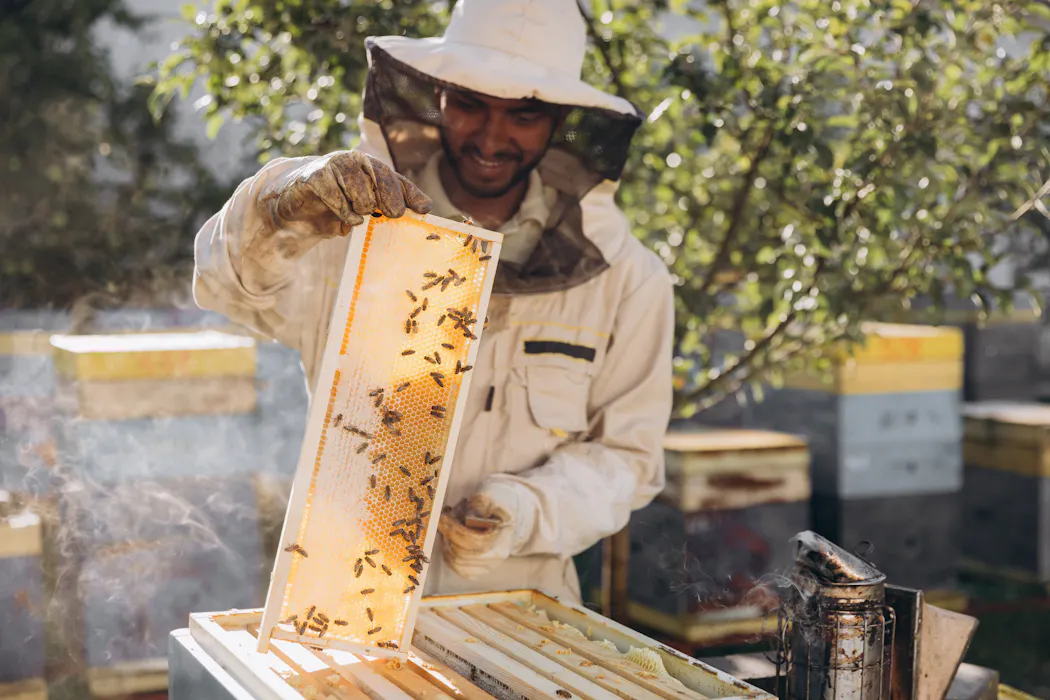
At first glance, beekeeping might seem an unusual hobby to introduce to young men – a group often discussed in policy and research as being “at risk”, of poor mental health and disengaged from society.
Yet perhaps it is precisely because of these societal expectations that beekeeping has such power as an activity. This is something I have witnessed through my work with North East Young Dads and Lads, an organisation dedicated to helping young dads play an active and meaningful role in the lives of their children.
For years, I have argued against the tendency to frame young men through the language of crisis. Young men are frequently portrayed as a problem to be solved or a population to be managed. Much of the contemporary discussion centres on the “manosphere” and the social ills of social media, gaming and pornography.
Even through more positive approaches to masculinity, less attention is paid to the forms of creativity, care and curiosity that emerge when young men are given opportunities to cultivate interests and develop habits that provide meaning and purpose. Environmental and ecological work is especially adept at this, especially for young men living in urban areas with little to no private outside space.
Hobbies can bring joy, wellbeing and focus to our busy lives, but so many of us don’t have one. If you’re ready to replace scrolling with stitching, or hustle with horticulture, The Hobby Starter Kit (a new series from Quarter Life) will help you get going.
I am part of a team of community beekeepers who look after an apiary (bee yard) site on the rooftop of Baltic Centre for Contemporary Art. We also offer training to young men at a community garden in Gateshead, but there are community beekeeping opportunities around the country – no private garden necessary.
Caring for bees requires patience in place of speed, attentiveness rather than dominance and cooperation instead of competition. The activity encourages forms of observation and responsibility that differ from some hypermasculine expressions of manhood. More akin to fishing (another popular pursuit among the young men I work with) than football, a key difference is the element of care over capture – even for those who fish with a “catch and release” principle.
Hobbies are rarely just about passing the time. They provide structure and routine, especially when they take place in a community context. They create relationships and offer opportunities for shared learning and collective accomplishment. In a period in which loneliness and social isolation have become increasingly recognised as public health concerns, hobbies can act as important sites of connection and belonging.
Looking after bees requires commitment and consistency, qualities that are often left out of public discussions about young men.
Therapeutic beekeeping
Many of the young men I work with experience mental health struggles. I repeatedly hear from them about the therapeutic qualities of beekeeping. One of the young dads involved in the project is a former soldier who has suffered from post-traumatic stress disorder. He found the most significant therapy to be through his environmental and ecological efforts with the bees.
Here, the social dimensions of beekeeping become particularly important. The shared work of manufacturing hives, inspecting colonies and exchanging knowledge provided opportunities for friendship and mutual support. In this sense, beekeeping became a vehicle through which relationships could be formed and sustained.
There is nothing inherently masculine about beekeeping – yet it can offer important spaces for men’s mental health, alongside learning new skills in the green economy. Beekeeping was the first step for many of the young men towards volunteering in tree planting, gardening and landscape management, as well as bike maintenance and citizen science work through bird watching and water quality testing. This has also led to paid employment as beekeepers, outdoor educators and bike mechanics.
The significance of this hobby lies in what it makes possible. It opens up spaces in which care can be practised and valued. Feminist scholars have long argued that care should not be understood as the responsibility of women alone, but as a collective and ecological practice. Caring for bees, landscapes and one another are deeply interconnected acts.
My work with young men – many now navigating their early adulthood as fathers – didn’t begin with beekeeping. It began with tackling loneliness, reducing social isolation and supporting family relationships.
I have found it is important to create spaces where men feel comfortable, where there is no pressure to perform, no expectation to immediately open up or explain yourself. Instead, connection can be built, as recent research has shown, through doing things together.
Perhaps most significantly, these stories challenge some of the assumptions that underpin contemporary debates about boys and men. Moving beyond deficit approaches to masculinity is important – young men should not be only defined by what they may reject, resist or protest. My research shows how they can be an asset to, not just an obstacle against, sustainability. The experience of beekeeping suggests that many young men respond positively to opportunities that involve responsibility, stewardship and care.
There is some scientific debate around negative ecological impacts of beekeeping, including concern that honeybee populations can outperform and transmit disease to at-risk wild bee species. A key distinction in promoting beekeeping then, is an acknowledgement that we do not need more private beehives, but we do need pollinator protectors.
Community beekeepers can help inform and educate on forage, planting and chemical use, as part of wider bee-friendly advocacy. It is through this care and collective action where the benefits against loneliness are most felt.
My work does not romanticise either young men or bees. Keeping bees is demanding work and not every hobby will resonate with every person. One young dad said: “I was nervous coming into the group for the first time. But being outside and talking to the young dads, getting stuck in and helping, made me feel calmer. I’d recommend that to anyone.”
Hobbies also provide opportunities to imagine a different future for ourselves. They allow people to become known through what they love rather than through the problems they are perceived to have.
Perhaps this is one of the lessons offered by the hive itself. Bees remind us that flourishing rarely occurs in isolation. It emerges through relationships, through shared labour and through the quiet, often overlooked practices of care. In this respect, beekeeping is much more than a hobby. It is an invitation to think differently about care, about community and about the kinds of lives that young people might be able to build.

Michael Joseph Richardson receives funding from the National Lottery Community Fund.